Feeds:
Posts
Comments

Archive for the ‘Thoughts and Musings’ Category

How can you choose a therapist who’s right for you?

Here’s what to look for:

1. Your therapist should be actively engaged. I was surprised,  years ago, when I read an account by Theodor Reik, an early psychoanalyst, of his analysis with Freud.  The founder of psychoanalysis didn’t just sit there, stroking his beard like a sphinx.  That’s a myth.  Reik described their work together as a 50/50 give and take, a conversation about what Reik was thinking and feeling.

Another myth is the “strict Freudian.”

There’s no such thing as a “strict Freudian.”

Freud wasn’t strict – or grim and serious all the time, either.  He was adventurous, exploratory, flexible, and constantly questioning what he was hearing and seeing, and what he believed was going on.  No one wants a therapist who acts like a punishing father-figure, or just sits there and nods.

That doesn’t mean your therapist should be talking about himself all the time and distracting from your joint task of exploring your thoughts and feelings.  Every good therapist knows that sometimes his job is to shut up and listen – especially when a patient is full of feeling and needs to get something out.  But you should be working together.  Actively.  If you ask him “what do you think?” he shouldn’t just say “what do YOU think?” back at you.  That’s a cop-out.

2. He should enjoy what he does. Every therapist has to look at the clock sometimes.  But if he seems to prefer looking at the clock to looking at you, it’s a problem.  This isn’t a job you do for money – trust me on that.  You do it because you were born with a strange gift – like mathematics or playing the violin – and you feel drawn to it.  And because you love it.  I hope to die sitting in that chair, listening to a patient telling me his thoughts and feelings (or maybe right after he’s left – I wouldn’t want to traumatize him.)

3.  He should welcome all your feelings – including your anger at him. A good therapist needs you to trust him enough to tell him the truth, even if the truth is that you’re unhappy with the work he’s doing.  He doesn’t need you to love him.

It is his honor and privilege to have your trust, and share your secrets.  You pay him.  That’s enough.  He’s not your guru.  He’s your therapist.

4. He should admit his mistakes. We all make them.  Nothing shows you can trust a therapist like his admitting he isn’t perfect.  If he gets something wrong, or chases an idea that’s off the mark, or just has a bad day – you should be able to say so, and he should be able to own it.  No one’s perfect – not even The People’s Therapist.  But any therapist becomes a better therapist if he’s willing to admit he’s human.

5.  He shouldn’t just be the President of Hair Club for Men – he should also be a client.

A good therapist has put in his own time in that other chair, and shed a few tears and had some anger too.  That’s how you get to be a good therapist.  You don’t learn most of it in classes, or from a book.  You learn it by doing it.  A good therapist has had his life profoundly changed in positive ways by psychotherapy.  He wants to share that opportunity with you.

5. He should be a bit of a kook. The best therapists are a little nuts – but good nuts.  Part of the joy of living is reveling in your own uniqueness – enjoying being you.  Lena Furgeri – my first therapist -dresses in flowing purple dresses and lots of big jewelry.  I love it.  She loves it.  She loves opera, too.  She’s a lot of fun.

Freud was a bit of a kook, too.  His office was filled with weird little statues and doo-dads from various primitive cultures.  He loved that stuff.

He was also hopelessly addicted to cigars.  And he was willing to chase any crazy idea if he thought it might lead him to somewhere useful.  He knew you have to get lost sometimes if you’re going to find your way to someplace new.  He came up with a lot of theories, and some were doozies.  Others changed the path of human thought.  But he had to be a little nuts just to take the risk of “thinking different.”

6. He should be a non-conformist.

Psychotherapy is improvisational.  Every patient needs a different therapist, which means every therapist has to be a different person for each patient.  A good therapist loves that challenge.  But you can’t improvise if you’re just reading the notes on the page.  You have to break free, and be yourself.  The best improvisation – think of jazz – balances an established structure with freedom and personal expression.

That’s why your therapist should be a gangsta.  He shouldn’t be afraid to drive close to the edge, take risks, stretch a bit.

The so-called “gangsta rappers” – folks like N.W.A., Eminem, Lil’ Kim, Snoop Dogg, Dr. Dre, 2Pac, the Wu-Tang Clan, Slick Rick and The Notorious B.I.G. – are a loosely-aligned group of musicians and poets whose work has combined a mastery of rhythm and verbal fluency with a desire to surprise their audience and challenge its assumptions – often by taking on sacred cows in ways designed to stir controversy.

In this sense, they’re not so terribly different from other musicians and artists, poets and comedians over the years who have intentionally challenged the “acceptable” in order to show us truths about ourselves – people like Jeff Koons, John Cage, Sam Kinison or Allen Ginsberg.

Your therapist should be like that – willing to take the critical and philosophical tools of psychotherapy and apply them to your life, and your world – the world you live in right now – in a way that makes them fresh, relevant and powerful.

Freud was bucking societal norms just by admitting he was thinking about the stuff that fascinated him – sex, the unconscious, primal drives.  It’s amazing he was able to get away with it, let alone found a new profession.  He was clearly a gangsta.

Just for the heck of it, I’ll close with a musical selection by one of my favorite non-conformists:  Frank Zappa.

Zappa broke plenty of rules.  A brilliant musician – a child prodigy – he took doo-wop music as seriously as symphonic music, and wrote both, as well as pop songs, art songs, chamber music, jazz and outrageous parodies, like his classic, “Valley Girl.”  Zappa did his own thing.  There’s no doubt he was a gangsta.

Here, then, for no apparent reason other than the sheer fun of it, is a Frank Zappa composition titled “Sofa” as played by – you guessed it! …a Bavarian brass band:

Add to FacebookAdd to DiggAdd to Del.icio.usAdd to StumbleuponAdd to RedditAdd to BlinklistAdd to TwitterAdd to TechnoratiAdd to Yahoo BuzzAdd to Newsvine

Read Full Post »

The other day a patient posed a simple, but troubling question:  “What am I supposed to do with all this anger?”

This guy had plenty of good reasons to be angry.  His childhood was an experience I wouldn’t wish on anyone.

But that all happened decades ago.  Both his parents were long dead.  He wondered if he was wrong to still feel this way – if it was time to move on – forgive and forget.

I didn’t think so.  I told him what my first therapist, Lena Furgeri, told me years ago when I asked for advice on how to handle my roiling emotions:

“Keep coming,” Lena said,  “and keep talking.”

You can’t just forget your feelings.  And I’m not a great fan of the term “forgiveness” either.  I’m not even sure what it means.

There’s an interesting documentary, from 2006, called “Forgiving Dr. Mengele.”   It’s about Eva Mozes Kor, a woman who, as a child, was tortured by Josef Mengele, a Nazi doctor at Auschwitz, during hideous experiments he performed on prisoners.

Eva Mozes Kor says she “forgives” Mengele for what he did to her.

This statement has triggered controversy and outrage.  You don’t forgive a Nazi.  Mengele was a monster.

Or do you?  This leads us into a metaphysical morass, attempting to chart the contours of sin and forgiveness.  Perhaps the Catholic Church can attempt such a mission, but that’s not my job as a therapist.

My work is comprehending human emotion.  And I know you can’t just forget anger because you decide to “forgive.”

Anger must be metabolized.

The focus is not on the person who caused your anger, or his actions.

It’s about you – and your emotions.

To metabolize anger you must not fear it.  You must contain it – feel it, study it, learn from it – but not succumb to the temptation to go unconscious and act on it.

When you act unconsciously on anger you “act out” – discharge aggression.  Or you act in – shutting down and refusing to act.

It is tempting to act out (or in) because discharging aggression feels good.

We don’t often own this truth.  But pay attention when you hear that something bad happened to someone you don’t like.  You’ll catch the corners of your mouth pulling up.  You are smiling – a primitive simian indicator of pleasure.  Unconscious sadism is a powerful force. Smashing things is fun.  Violent movies are fun, too.  Most of us are angry most of the time, about something.  Anger co-exists with other emotions, and it doesn’t have to have a logical explanation – it just is, and it gratifies you.

There is a good evolutionary reason why discharging anger feels good .  It’s the same reason sex feels good:  because the animals who were aggressive (and enjoyed sex) lived to reproduce and pass on their genes.

But in the modern world, discharging anger can get you into trouble.  “Losing your temper” – a euphemism for acting out unconsciously by discharging aggression – is like getting drunk.  It might feel good at first, but there’s always a hang-over.  We all know how easy it is to vent anger at the person who happens to be nearest to you, usually the one who cares the most and least deserves this treatment.

The mass unconscious discharge of aggression is commonly known as war.  At some level, it feels good too.  And leads to untold horrors.

That’s why metabolizing anger is a better strategy.  You put the anger into words, and start to understand it.  This process converts raw emotion into communication.

The poet, Rainer Maria Rilke, wrote,  “Let life happen to you.  Believe me: life is in the right, always.”

Feelings are like that – even anger.  You  have to trust them.  Let them in.  Let them happen.

No one can say when you will be ready to move past these feelings – that is up to you.  But the organic process – the metabolizing of feeling – is necessary and unavoidable.

Eva Mozes Kor may or may not have forgiven the horrid Dr. Mengele, but she has metabolized her anger, turning it into words that achieve good for mankind.  She has devoted her life to speaking publicly on the events of the Holocaust, teaching the importance of tolerance and understanding.

In this regard, she resembles another angry person who metabolized his anger to make the world a better place:  Martin Luther King.

Dr. King felt a passionate anger at the injustice of racial segregation.  Like Eva Mozes Kor, he chose not to act unconsciously and discharge his anger in violence.  But he didn’t forgive and forget either.

He metabolized his anger into words.

Inspiring words.

Don’t fear anger.


Add to FacebookAdd to DiggAdd to Del.icio.usAdd to StumbleuponAdd to RedditAdd to BlinklistAdd to TwitterAdd to TechnoratiAdd to Yahoo BuzzAdd to Newsvine

Read Full Post »

Groucho Marx once said he would never join a club that would have him as a member.

That’s how one of my patients seems to run her romantic life.

Somehow she always seems to chase the guys who don’t want her – but has no time for the guys who do.

This is a common syndrome, which therapists term “the seductive-withholding love object.”

Here’s how it works:

My patient, like plenty of people, had parents who were impossible to please.  Hers were especially so.  Her father was a cold, distant math professor; her mother a schizophrenic, lost in a maze of paranoid delusions.  They were less interested in their daughter than they were in themselves.

But children are parent-pleasing machines.  They are the product of evolutionary forces that ensure that the child who best pleases his parents is the most likely to survive – and so pass on his genes for parent-pleasing.

If a child cannot please a parent, he has failed in his evolutionary mission.  He places the fault within, and blames himself.

Later in life, he unconsciously continues his hopeless childhood mission – trying to win over people who withhold love.

That’s why my patient chases seductive-withholding love objects.

This syndrome leads to a lot of pursuing people who aren’t interested in you.

Even worse – you end up ignoring attempts at closeness from people who ARE into you.

If you are used to chasing seductive-withholding love objects, you will probably respond to an accepting, interested love object with anxiety or disgust.  You will wonder why someone would want you, when you are clearly not lovable – and it will make you nervous, to try to live up to their positive image of you.  You might also feel a twinge of disgust for a person who would openly pursue someone like you, whom no one should truly want, since even your parents turned you away when you came asking for care.

That’s a bad situation.

What to do about it?

As always, the answer in psychotherapy is AWARENESS.

If I said you were standing in a pot of water over a fire – you’d probably jump out.

Being made aware of your situation might convince you to change your behavior.

One final thought.  The seductive-withholding love object is a powerful force in human societies – in fact, it’s how the military turns young people into fighting machines.

That tough-as-nails drill sergeant who treats the new recruits like dirt?  Yup – a seductive-withholding love object.  They’ll do anything to please him.

By the time he grudgingly acknowledges that they might be okay after all…he’s got them hooked.  And so does the military.

They’ll obediently follow orders, even if it puts their life in danger.

Anything to locate approval and love.

Add to FacebookAdd to DiggAdd to Del.icio.usAdd to StumbleuponAdd to RedditAdd to BlinklistAdd to TwitterAdd to TechnoratiAdd to Yahoo BuzzAdd to Newsvine

Read Full Post »

This week a patient complained he wasn’t sleeping well.  He said he was feeling like a hypochondriac – obsessively worrying about his health.  He’s young, and perfectly well, but suddenly every little ache and pain was bubonic plague.

Cognitive-Behavioral Therapy (CBT) is usually effective for anxiety, so we did a little CBT exercise together, in which you:

1. identify the cognition;

2. reality-test the cognition; and

3. formulate a soothing counter-message.

This sounds simple enough, and it makes good sense.  Anxiety is caused by cognition – predictive thoughts.  You predict that something terrible is going to happen, and that triggers a freak out:  your pulse races, you start to sweat, you can’t sleep – all the standard symptoms of anxiety.

So…first step:  identify the cognition.  The prediction that was causing his anxiety was the thought that his sore throat was caused by herpes.

Second step:  reality-test that thought.  He’d already checked with his doctor and online.  This was not herpes.  Herpes in the throat is a rare condition and would produce different, and far more severe symptoms.

So far so good.

Step three:  formulate a soothing counter-thought.  I asked my patient to tell himself what we both knew – this is just a sore throat, it isn’t herpes.  Relax!

That’s where we ran into trouble.

My patient insisted it wouldn’t work.  He couldn’t help it, he said.  He just kept worrying about his health.

I said he could help it – we can all control our thoughts, if we set out to.  He just didn’t want to.  Some part of him was enjoying scaring himself.

Huh?

Scaring yourself, oddly enough, can be soothing.  By telling yourself you are expecting the very worst, you assure yourself you are prepared for it.  That is intended to calm you down.

Consider what truly scares you.  It isn’t just scary monsters.  It’s scary monsters jumping out of nowhere and saying “boo!”  What scares you most isn’t what you’re expecting – it’s what you aren’t expecting.

So you try to expect everything.

That’s why you have nightmares.  Your unconscious mind brings you the very worst, in an attempt to calm you down by assuring you that you’re ready for it.

Fear is an ancient emotion, located in the amygdala, a primitive part of the brain, near the center.  Fear evolved early, as part of the fight or flight instinct.  Little animals needed fear to tell them to run from danger, just as they needed anger to tell them to fight for their life when a predator had them cornered.

When you are under extraordinary stress, like a mouse being hunted by a cat, you become hyper-alert, in an attempt to assure yourself you aren’t going to be taken by surprise.

But you can’t stay hyper-alert forever.  Soldiers who are in combat for long stretches can develop PTSD – post-traumatic stress disorder – a condition in which the brain is harmfully affected by trying to stay hyper-alert for too long a stretch.

My patient grew up in a world where nasty surprises happened all the time.  His father died when he was young.  His mother, an immigrant, raised him alone, amid poverty and discrimination.  As a boy, he was picked on constantly and never felt safe in his neighborhood or at school.  Now, as an adult, he was attempting to stay hyperalert so he wouldn’t be taken by surprise again.

I urged my patient to switch from dwelling solely on fear to giving his other most primitive emotion a try – anger.  Instead of constantly staying afraid, he could stand up to what scared him and fight back.  His new attitude could be – there’s nothing out there I can’t handle.

Like in Aliens, when Sigourney Weaver grabs the really big flame-thrower and says to the monster “You want to take me on?  Bring it, bitch!”  Every horror movie ends like that.  Someone – a long survivor, maybe – has finally had enough of being picked off one by one by the ax-murderer, and decides to fight back, even against the odds.

My patient liked that approach.  He’d survived plenty already in his life.  He could handle whatever came his way.

Heck, even if it were herpes (which is wasn’t) – he’d deal with it.  Whatever happened, he’d be okay.

Better to fight back than to live your life afraid.

Add to FacebookAdd to DiggAdd to Del.icio.usAdd to StumbleuponAdd to RedditAdd to BlinklistAdd to TwitterAdd to TechnoratiAdd to Yahoo BuzzAdd to Newsvine

Read Full Post »

The People’s Therapist is a big Stevie Wonder fan.

Here’s one of my favorite songs, “I Believe (When I Fall in Love),” from the legendary 1972 album “Talking Book”:

You can see what makes it a classic.

First – it’s Stevie Wonder.

Second – who can resist a song whose chief lyric is “I believe when I fall in love this time it will be forever”?

We all want to find perfect love – and have it last forever.

But listening to this song feels like a guilty pleasure – there’s something that nags at you, even as you want to go along with it.

In reality, it’s impossible to know how long a relationship is going to last.  You can “believe” all you want – but no one can predict the future.

Stevie married his first wife in 1970, divorced in 1972, then, after multiple relationships, married again in 2001.  He has seven children, the product of what Wikipedia describes as “his two marriages and several relationships.”

For Stevie, where relationships are concerned, I think it’s fair to say “it’s complicated.”

That’s true for most of us.

Relationships are organic – like plants.  No one knows whether they’re going to flourish or wilt, and there’s only so much you can do to control them.  You can’t pull on a leaf and make it longer – it has to decide to grow that way on its own.

I try to avoid valuing a relationship based on its longevity.  We all know people who have had meaningful relationships that lasted only a few years.  And we all know couples who have been miserable together for decades.

At some point, what matters most in a relationship is not whether it lasts forever, but whether you enjoy being in it.

When I treat couples, I ask them right away:  “How much of the time, as a couple, are you having fun?”

I’m not trying to be flippant – it’s an important question.

My general rule is that they should be having fun more than 50% of the time.  Otherwise, it’s trouble – and I begin to question why they’re sticking it out.

In an existential sense, having fun – being happy – is what life’s about.  We’re here to experience joy, and our relationships should be a source of that happiness.

There are a lot of things I could say about relationships – that they should be balanced, that partners should treat one another as equals and relate as adults, that they should be two whole people pursuing a shared goal, that a healthy relationship requires attraction, trust and respect between the partners.

But the most important thing – the starting place – is that you should be having fun.

The truth is most relationships end in break-up – and that’s not necessarily a disaster.  It might be an evolution to something different. People grow and change over time, and having several loving relationships – like Stevie’s – might not be fundamentally better or worse than having only one.

It’s having fun, together with a partner, that really counts.

Here’s another song (lyrics by Eddy Arnold, performance by the incomparable Nat “King” Cole), called “Sometimes I’m Happy.”

I think gets a little closer to the truth of what relationships are really about:

Sometimes I love you.

Sometimes I hate you.

But when I hate you.

It’s ’cause I love you.

That’s how I am

So what can I do?

I’m happy when I’m with you.

Add to FacebookAdd to DiggAdd to Del.icio.usAdd to StumbleuponAdd to RedditAdd to BlinklistAdd to TwitterAdd to TechnoratiAdd to Yahoo BuzzAdd to Newsvine

Read Full Post »

Pretend for a moment that you have been captured by terrorists.  They shackle you up in their torture chamber, where you are confronted by their fiendish leader.

“So,” he sneers, “Are you going to cooperate?  Or are we going to have to make you cooperate?”  And he emits an evil cackle.

At this juncture, you are faced with two options:

Behave nobly, and stubbornly refuse to have any part in this travesty; or

Break down and sob like a child.

I suspect you’ve played this scenario through your mind at one time or another.  Hollywood represents our collective unconscious, or at least our collective imagination, and this set-up arises with predictable regularity in action thrillers (including every James Bond movie ever made).  It seems sensible enough to ask yourself what you would do in this situation, all the while knowing perfectly well  you’ll never know for sure (unless – god forbid – it ever happened.)

The real question is – why do those two options spring to mind as the only alternatives?

The answer is that you contain two selves – the adult and the child.  Under stress, you can either resist the urge to regress and stay conscious as an adult.  Or you can permit stress to regress you, go unconscious, and return to the young child.

It doesn’t take terrorists to trigger this voyage back to infancy.  The collapse fantasy, as I call it, lurks as a temptation in our minds most of the time.

One of my patients recently found himself on his knees, weeping and pleading with his partner to take him back.  Her response, as you might imagine, was disgust and horror that this man she’d respected had collapsed before her eyes into a helpless child. His adult self might have realized you sometimes have to step away if you want someone to follow – but the child wanted what he wanted and was going to scream until he got it.  Needless to say, it didn’t work.

Later, filled with remorse, he told me he didn’t know what came over him.  When a patient tells me something like that – some version of “I don’t know what came over me” – I know he’s describing unconscious behavior.  And when we go unconscious, the child – and the collapse fantasy – tends to take over.

Once the child’s in charge, here’s how things operate:

He experiences solitude as abandonment.  An infant abandoned even for a moment in his cradle, if he registers the slightest need for care, will scream as though in mortal danger.  For all he knows, he is.  He is utterly dependent.

He goes victim and broadcasts his upset.  He perceives his scream as his only means for survival.

He is impulsive and pleasure-seeking.  He wants what he wants.  Now.  Put a shiny toy in front of an infant – he wants the shiny toy.

Essentially, the child is an infant – your earliest incarnation. The temptation to regress into that infant state is strong because it reproduces a time when you received total attention and care.  All you had to do was register your desires – any impulsive desire – and it would be satisfied.  Mom would come running – someone would come running – if you only yelled loudly enough.

My client, stressed by his partner’s stated desire to leave the relationship, succumbed to the temptation to regress, and began relating to his partner as an infant to a parent – weeping, crying, begging for the care he needed.  He entirely forgot her needs – which only drove her further away.

The collapse fantasy haunts us – especially when we’re under stress.  In fact, “nervous breakdown” is a code word for the collapse fantasy in action.  That’s when you announce you are overwhelmed and can’t take it anymore – you are giving up…and they cart you away to the looney bin. I’ve run into this syndrome mostly with younger patients – adolescents or people in their early twenties.  They “lose it” and do something crazy, or make a half-hearted suicide attempt – whatever it takes to end up in a mental hospital.  At that point, in the vast majority of cases, they realize they’ve made a mistake (mental hospitals are not relaxing places.)  That’s when they begin to see that the collapse fantasy doesn’t work as a life strategy.  The help you really want – mommy – doesn’t arrive.

Why does the collapse fantasy present such a strong temptation? Consider the trajectory of your life, for a moment, in terms of loss.  As you grew out of childhood, the first, profoundest loss was the total, unqualified attention of a parent.  Have you ever watched a young child at a playground calling for his mother to watch him do some trick on the jungle gym?   “Mommy.  Mommy.  Mommy!  Mommy!!  MOMMY!!!  MOMMMMMMMYYYYYYYY!!!!!”  …until she finally breaks off her conversation, turns, and acknowledges him with a wave.

As adults, we have to parent ourselves, and assume responsibility for our own needs (as well, perhaps as the needs of our children and even our parents.)  That can feel overwhelming.  It’s no wonder we unconsciously long for a return to the past.

The good news is that adulthood brings benefits as well as losses.  It’s a trade-off in some respects, but independence can be sweet.  It feels good to make your own decisions, and rely on your own judgment. If you’re not busy screaming for someone else’s attention all the time, you can begin focusing attention on yourself – and give yourself the care you need.

Add to FacebookAdd to DiggAdd to Del.icio.usAdd to StumbleuponAdd to RedditAdd to BlinklistAdd to TwitterAdd to TechnoratiAdd to Yahoo BuzzAdd to Newsvine

Read Full Post »

Two famous pilgrimages:

The Journey to the West – the legendary voyage of the Buddhist monk, Xuanzang, to India to bring the Sutras back to China and establish Buddhism there.

Another, less celebrated Journey from the East – Freud’s parents, Ostjuden (Eastern Jews), emigrating in a horse cart from the ghettoes of East Galicia to Vienna.

The Silk Road channeled a rich current of human activity across Asia from China to Europe.  Along with the merchants and their caravans of camels laden with spices and luxuries, ideas flowed back and forth across the continent.  In the center, there was India.

It was in India that the powerful concepts of Buddhism originated, then spread East, to China, and West – ultimately, perhaps, to Freud’s office in Vienna, where so many of his ideas about living more consciously seem to echo Buddhist philosophy.

I’ll touch on two issues:  first, why Buddhism doesn’t have to be intimidating, and second, some interesting stuff it has to say about our daily lives:

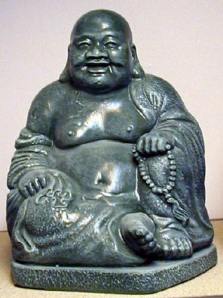
You don’t have to think of Buddhism as just a religion.  The ancient India of around 500 B.C.E.,where the Buddha, Siddhartha Gautama, lived, was a lot like the historically contemporary Ancient Greece – the existence of a pantheon of gods and goddesses was taken for granted.  Buddha wasn’t interested in being a god – there were already plenty of gods.  His goal was achieving human enlightenment – a condition of peace and serenity.  Over thousands of years, Buddhism spread all over Asia and splintered into a thousand different schools and practices.  Some of them espouse devotional practices, complete with temples and incense and kowtowing before fat, smiling statues.  You can disregard much of that, and concentrate on the ideas.

To give you a taste of what I’m talking about, here’s the most famous single story in Buddhism.  There are a dozen variations, but this covers the basics.  See if it doesn’t leave you thinking:

The Buddha was born a wealthy prince.  Upon his birth, a fortune-teller issued a prediction that the young prince would eventually renounce all his wealth, and become a monk.  To prevent this, his father, the king, ordered that Siddartha be prevented from leaving the walls of the palace.  For 29 years, the prince was permitted to see only wealth and beauty.

Finally, perhaps on an impulse – some say a mischievous god was involved – Prince Siddhartha escaped for the first time outside the palace walls. Almost at once, he saw four famous sights, which changed his life forever:

He encountered an old man, and learned that he would not remain forever young.

He saw a leper, and learned of the existence of suffering and disease.  

He saw a corpse, and knew that one day he, too, would die.

He met a monk, and realized there were other paths to joy than the pleasure garden within the palace walls.

From that day forward, the Buddha became a monk, devoting himself solely to the search for enlightenment.

I told you this was a powerful story.

Opening your eyes to the world around you, and the emotions you carry within, stirs something in the human soul, which could change your life forever.

That’s what we do in psychotherapy.

Add to FacebookAdd to DiggAdd to Del.icio.usAdd to StumbleuponAdd to RedditAdd to BlinklistAdd to TwitterAdd to TechnoratiAdd to Yahoo BuzzAdd to Newsvine

Read Full Post »

One of my patients came to me last week looking like he’d just been through a war.

He plopped down in a chair and began to weep.

It didn’t take me long to realize he’d been “dumped.”  At least, that’s how he characterized it.

But I don’t believe getting “dumped” exists.  Here’s why:

First, the obvious reason – you don’t want to go out with anyone who doesn’t want to go out with you.  It doesn’t make any sense, and even if you could go out with someone who doesn’t want to go out with you, it wouldn’t be fair to the other person to to you – you both deserve better.

Second, a partnership is a system of two.  Nothing is unilateral in a partnership.  If your partner “dumped” you, and you’re surprised, that means you’ve been ignoring signals and your partner has been colluding with you in not bringing you his honest feelings.  You’ve been in a conspiracy together to avoid something you both have to face – the organic reality of what you have, where your relationship really is.

Why do people do this?  Because they are acting like children – regressing, under stress, into the child they still are inside and relating to their partner the way a child relates to a parent instead of as an equal, another adult.

A partnership must have balance – the balance that comes from two whole people – not two half-people – coming together to share a walk down the path of life.  You share a common goal – that shining city far away down the path – and you choose to walk there together, and to enjoy one another’s company along the way.

To exist in a successful partnership, you must first learn to love yourself.  A child cannot love himself because he doesn’t know himself – he looks to his parent to tell him who he is, that he is good, that he is worthy of love.  If a child is rejected, he feels he has failed in his evolutionary mission to survive by pleasing his parent, and so he places the fault within himself and concludes he must be bad, unloveable.  But an adult is different – he is self-sufficient, and he can be his own parent – tell himself he is worthy of love.

We all wear a price tag around our neck – and we assign the price.  That price tag shouldn’t say “best offer accepted” – it should say “one millions dollars.”  Otherwise you will be giving yourself away for too low a price to someone who doesn’t deserve you.

That’s why you need to love yourself in order to parent yourself.  And you need to parent yourself in order to separate from the child and become an adult.

You must be an adult in order to join forces with another adult and share experience together, as equal partners.

An equal partner in a balanced relationship cannot “dump” another equal partner.  That would violate the laws of physics.

So no – my patient wasn’t “dumped.”  No one ever gets dumped.  You just find out you have some work to do on yourself before you enter another relationship.

Most of that work is learning to love the child you once were – and still are.

Add to FacebookAdd to DiggAdd to Del.icio.usAdd to StumbleuponAdd to RedditAdd to BlinklistAdd to TwitterAdd to TechnoratiAdd to Yahoo BuzzAdd to Newsvine

Read Full Post »

The clip at the bottom of this post is a performance of an excerpt from the Art of the Fugue, by Johann Sebastian Bach.

There are a few reasons why this music opens emotional floodgates.

This piece was written under astonishing circumstances that speak to the essence of what it means to work and to be human.

Bach wrote the Art of the Fugue at the very end of his life as the culmination of his greatest achievement, which was perfecting the art of contrapuntal music.  A fugue (the word means “flight”) is a musical work in which parts are assigned to different “voices” which weave in and out of the piece in “counterpoint” to one another.

The Art of the Fugue is the longest and most complex collection of fugues every attempted, written by the greatest genius of contrapuntal music who ever lived.

Bach didn’t write this work because anyone asked him to, or because there was any particular demand for fugues or counterpoint at the time.  In fact, fugues were out of fashion.

The Art of the Fugue was written because Bach loved his work, and sought to create an expression of his best self – the most authentic self, the person he could be when fully conscious and expressing what was best in him.

How do I know that?

Consider the fact that this fugue, like several in the Art of the Fugue, is based on a four-note theme that spells out Bach’s name:   B♭–A–C–B♮ (‘H’ in German letter notation.)  Yes – he literally wrote himself into it.

Another point to consider:  If you’ve listened to the clip below, you’ll notice this final fugue of a long, involved series is not only astonishingly complex – the highest mastery achieved in the art of counterpoint – it is also unfinished.

That’s because Bach died while he was writing it.

Bach’s son, the composer, Carl Philipp Emanuel Bach, scribbled a note in the original autograph of this final fugue:

“Über dieser Fuge, wo der Nahme B A C H im Contrasubject angebracht worden, ist der Verfasser gestorben.”

(“At the point where the composer introduces the name BACH (which in English notation is B♭-A-C-B♮) in the countersubject to this fugue, the composer died.”)

Yes – Johann Sebastian Bach turned his name into music, then he put down his pen and died.

This is that music.

There is some controversy over this story.  It is possible that Bach lived on a few more days, and worked a bit more, dictating or correcting fragments of other pieces.  Musicologists and historians have debated these matters.  But there can be no doubt of Bach’s intention. He wanted to die working, and to leave this intricate, haunting series of notes as his last will and testament.  This is Bach’s soul, translated into music – a fugue, the musical creation he mastered above all others.

The music itself?  It moves the way a mind moves when deep in purest thought.

To create, to DO SOMETHING, is to assign meaning to our time on this Earth.  We are human – we chase dreams.  Dreams of creation.  That is our work.  That is what our work represents.

If you are not fulfilled by the work you do – if you are feeling lost, unsatisfied, uninspired – listen to Bach, and dream.

Find your inner voice, and express it through creation.  That is your best self making itself heard.

In the meantime – here is a fragment of beauty:  the work of a genius, left to ponder for the ages:

Add to FacebookAdd to DiggAdd to Del.icio.usAdd to StumbleuponAdd to RedditAdd to BlinklistAdd to TwitterAdd to TechnoratiAdd to Yahoo BuzzAdd to Newsvine

Read Full Post »

Dr. King would have turned 81 this week – an excellent opportunity to discuss ageism, an insidious form of  discrimination.

The starting point in any discussion of discrimination is why difference is an issue at all.

Some of your discomfort with difference derives from sheer inexperience.  It has been proven that a witness in a courtroom will more  accurately identify a defendant of his own ethnic background.  Most of us are used to seeing faces that look like our own.  Faces that are different tend to blur into sameness.

Another basis for discrimination is what psychotherapists call “transference.”   That’s when you transfer an expectation based on an earlier encounter into a prediction about future encounters.  If you are used to seeing Asian men deliver restaurant food and spot an Asian man carrying a bag from a Chinese restaurant, you might assume he’s delivering it.  That happened to one of my patients last week when he showed up at a friend’s place with take-out.  The doorman called up a delivery.  My patient was a guest, not a delivery man – and he felt insulted.

Transferences can crop up anywhere.  If you grew up in a world where African-American people, or Jews, or Muslims, or any other group, were supposed to be dangerous, violent, money-grubbing, untrustworthy or whatever, you might carry an unconscious assumption from that early programming.

Some of the worst discrimination arises from what you fear in yourself.  Think of the “straight-appearing” gay man who disdains the effeminate gay man.  Or the “bourgeois” African-American who looks down on the “ghetto” African-American.

Seniors face all three sources of discrimination.  They are unfamiliar, since our society tends to shunt them aside, separating them from the mainstream of younger people.  There is also transference – the images of older people in the popular media are often misguided and condescending, leading you to make assumptions about older people you meet in the real world.  And finally, you fear old people because you fear growing old yourself.

A few years ago I introduced a new member to one of my psychotherapy groups.  She was 77 years old.  No one else was over 50. The new member’s arrival triggered discomfort, especially in the youngest members, who expressed it by becoming flustered and telling her over and over again how terrific it was to have her join us.  Their response felt out of place and condescending – like it was all about her age.  Instead of the bright, prickly, opinionated, vain, complicated person in front of them, they seemed to be seeing a small child.

Over time, the group confronted this issue and explored unconscious feelings.

But their initial – and bizarre – reaction was all too familiar to the 77 year-old.

She shared powerful examples with us of ageism in her daily life:

  • If she went to a restaurant with younger girlfriends, a waitress always seemed to ask “oh, is this your mother?”
  • If she went out to shop for clothes with younger friends, the clerk told the younger people they looked great in their outfits, then, if she even noticed her, added, “even you look great!”
  • When she went to President Obama’s inauguration, a man chased her down and insisted on asking her age, then exclaimed “You’re terrific!” for no apparent reason.  This was typical – people are always telling her they “love” her  for no apparent reason.

Enough.  Let’s listen to Dr. Martin Luther King, Jr., the man we’re honoring on his birthday.  I hope, if he were still with us, he would be treated at the age of 81 as the man he truly was – not some crazy stereotype about older people based on ignorance, misguided assumptions, and fears of death and dying.

Add to FacebookAdd to DiggAdd to Del.icio.usAdd to StumbleuponAdd to RedditAdd to BlinklistAdd to TwitterAdd to TechnoratiAdd to Yahoo BuzzAdd to Newsvine

Read Full Post »

The best self-help book in the world would be titled “Feel Better – Right Now!”

Here’s what it would say.

First, exercise.

Second, get a pet.

And here’s why the People’s Therapist is always beating these two drums, and will keep beating them for all eternity.

Exercise, especially cardio exercise, releases natural anti-depressants into your body:  endorphins.

Endorphins are terrific.  Best drugs ever.  If you are feeling down, blue, under the weather and terrible – hit the stairmaster for 30 minutes and build up a good sweat.

I defy you to say you don’t feel better.

With endorphins, you always get the right dose, it always works, and there are no side effects.  If you get addicted to endorphins, well, so you might end up hitting the gym a lot.  Not a major downside.

(I won’t bother mentioning that exercise with make you look better and live longer, too.  Or that you should eat right as a part of an exercise program – and consult your doctor before doing strenuous exercise.  Too obvious.)

The People’s Therapist works out like crazy and he loves it.  The trick is to think of a regular fitness regiment as required maintenance – like flossing your teeth.  You just do it, because not doing it would be gross.  So do it.

Try yoga, or jogging, or swimming, or weight-lifting or martial arts or tai-chi or whatever floats your boat.  But get active.

Hey…you wanted to feel better RIGHT NOW, right?

NUMBER TWO:  get a pet.

Here’s why:

People have children for some strange reasons.  They don’t say as much – most people will look at you funny if you even ask them why they have children.

But in reality, for the most part, they have children to satisfy their own unconscious needs.

Maybe they want to mold a young person’s beliefs and values.

Maybe they want to bring someone into the world  who will love them completely.

Maybe they want to bring someone into the world whom they can love completely.

Maybe they want someone who will always be there for them.

Maybe they want someone they can always be there for.

Unfortunately, real, human children don’t work so well for these purposes.  They are not moldable, at least not after the first few years. Real, human children grow up into adolescents and adults, who can decide what they think, and who they will love, and whose love they chose to accept and whether it feels suffocating or controlling to them.  They are often very different from their parents – they might want to vote Republican, or be lesbian – and that can result in friction.  Real, human children can be a challenge.

But with a kitty or a puppy or a little bunny rabbit – NO PROBLEM!

Pets are fantasy children.  It’s no wonder we call them “baby” and “boo-boo” and talk to them in high squeaky voices.  They accept our love without complaint, and they return it in a flood of adoration.  They are moldable, and utterly helpless – but at the same time, much lower maintenance than real children.

Arguable, animal pets are a lot less interesting than real children, but that’s the point.  Animal pets let us regress into children ourselves in a harmless, healthy manner.  We can play at being their mommies and daddies, but it’s only play – the way children play with their dolls.

Pets let us pretend the world is a lot simpler than it really is, because an animal’s world is pretty simple, and they share that simplicity with us.

Every study ever done on the subject produces the same results:  pets make us happy.

IN CONCLUSION…I’m not saying working out or playing with your puppy is going to replace the long-term benefits of psychotherapy.

But a half hour on the treadmill – or staring contentedly at your gold fish – might just make you FEEL BETTER RIGHT NOW!!!

It couldn’t hurt.

Add to FacebookAdd to DiggAdd to Del.icio.usAdd to StumbleuponAdd to RedditAdd to BlinklistAdd to TwitterAdd to TechnoratiAdd to Yahoo BuzzAdd to Newsvine

Read Full Post »

« Newer Posts