 I was working this morning with a patient I’ve been seeing for a few months. At the end of our session I suggested he join one of my psychotherapy groups that meet once a week in the evenings.
“What? You can do psychotherapy in a group? How does that work?”
I was a bit surprised – most people have at least heard of group therapy, but it seemed the perfect time for The People’s Therapist to explain the basics of this mysterious and powerful psychotherapy modality. At very least, in my limited space here, I can dispel a few of the myths:
Myth #1: Group psychotherapy will be like a 12-step group. I think this idea comes about because the most familiar group therapy-like experience for most people is AA, or another 12-step group. Some of my patients who have done AA or another 12-step group in the past act like they know what they’re getting into, and march in to my groups with extra confidence, only to find that this new experience is very different from what they’re used to.
There are a lot of ways to run psychotherapy groups, and most groups are far less structured than an AA group. The dreaded “cross-talk” which is forbidden in AA is not only permitted in most groups – it’s encouraged. There’s no opening ritual or closing prayer – it’s open and free-form. You sit down and talk about whatever’s on your mind. The only rule is that you keep it real, so you don’t waste time.
Most psychotherapy groups also meet weekly, and are closed – not drop-ins, like most AA groups. If you are a member of a psychotherapy group, you are committed to the other members, possibly for years, and it is your duty to show up every week and participate, even when you don’t want to.
Myth #2. Group is just cheap therapy for a bunch of people at once. One of the advantages of group therapy is that it is cheaper than individual sessions – with so many people, the fee is lower for each person. But it is not cut-rate cheapo therapy. In fact, I strongly encourage my patients to participate in “conjoint therapy” – which means going to group every week and dropping in for an individual therapy session every two or three weeks, too. Group is very different from individual treatment, but they complement one another and the combination is more effective than either on its own.
How is group different? It is not so much vertical, like individual, but horizontal. You don’t dig deep into your past so much – you already did that in individual. The focus in group is on watching how you interact with others. I think of group as taking the work of the individual sessions out into a laboratory, where you can test what you’ve learned in a controlled setting. There is nowhere in the world like a group room – a place where you can sit with perfect strangers and the assignment is to put your authentic thoughts and feelings into words and interact. It is a powerful, often life-changing experience.
 Myth #3. For a group to work, everyone has to share a common life experience. I think this myth arises from people’s familiarity with support groups, rather than broader psychotherapy groups. A group focused on one issue – such as survivors of sexual abuse – is a support group.
I led a support group specifically for HIV+ gay men for many years, and it was a rewarding and useful experience, but my favorite groups have no specific focus and include the most diverse possible population. The HIV+ group created a safe place where guys dealing with that disease, and the stigma it still carried, could loosen up and share their experiences. But even in that group, there was plenty getting talked about besides HIV, including friendships, dating, career issues and lots of other topics.
I’ve had all sorts of people in my groups over the years. All ethnicities have been represented, people as young as 18 and as old as 78, rich and no-so-rich, men, women and trans people, gay, lesbian, straight and bi. Diversity only enriches the experience.
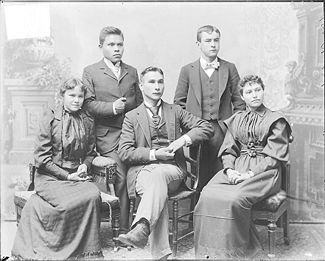
Myths #4 and 5: If I go to group, (a) I won’t want to share my therapist’s attention, so I’ll dominate too much or (b) I’ll be too scared to open up in front of all those strangers.
If you’re having these common worries about group, then it’s already working. These are transferences – you are transferring your expectations from prior life experiences onto a prediction about how group will play out when you get there.
The first lesson of group is that you will unconsciously relate to the group the way you related within your family. It’s useful to understand how that mechanism plays out, because it is also the way you relate to the world as a whole.
If you grew up having to fight to get the attention you needed in your family, you might play that role out in the group room when you arrive. If you grew up distrustful of others, expecting a negative response, you might shut down in the presence of the group.
Becoming conscious of these unconscious patterns, and practicing different ways of being, is the work of group therapy.
I could write about group forever – and I’ll probably be writing about it a lot more on this website. Group is some of my most challenging and rewarding work, and I’ve seen people take enormous strides in a group room that might have been impossible with individual therapy alone. Humans are social animals, and co-exist with one another. Group incorporates all those other people into the therapy experience – with powerful results.
If you’re like most people, now that you’ve learned a bit about group…you’re probably thinking about giving it a try. It’s a commitment. Most therapists require that you commit for at least 10 or 15 sessions, and this new way of doing psychotherapy will become a regular part of your life.
I promise, whatever happens, you’ll be changed by the experience – and you won’t forget it.



 My patient sounded bewildered.
 You’ve probably heard of “Pavlov’s dogs.”
 My patient was developing an observing ego. He kept having “deja vu” moments. He’d been down this path before, and he knew it.


 Sarah Palin’s nickname in high school was “Sarah Barracuda.”
 Sarah represents insecurity in love. Somewhere along the way, early on, she decided there wasn’t any love out there for her. So she had no love to spare for anyone else.
 My patient, a senior associate doing IP litigation at a downtown firm, brought me the bad news.
 When gay people come out of the closet, they usually run into some variation of the “but that’s unnatural” argument. This is the apparently sensible claim that it doesn’t make sense to be gay. Isn’t sex for procreation? Why would two males or two females become romantically involved if they can’t have a child together?
 You can breed a chihuahua that weighs 2 pounds. Or you can breed an Old English Mastiff that weighs 300 pounds.
 I mean raise other people’s children.
 That’s why, throughout the world, gays are the unofficial backbone of the adoption system. Without them, many children would suffer terribly, never finding wiling, dedicated adoptive parents.
 Inevitably, a few times a year, a new patient refers to me as “doctor.”
 First, you shake some bamboo sticks from a cup. The ones that fall to the ground have numbers written on them. Those numbers somehow guide the work of the fortune teller, who sits in the back of the temple in a special booth (there may be many fortune tellers working in a large temple.)
 I had the clear sense that this “fortune teller” – an old man in a silk jacket at a Taoist temple – was a colleague. Clearly a skillful psychotherapist, he was working in a different modality, but essentially doing what I do – observing, listening, and offering insights intended to create awareness.
 Last October, a law school placement director friend of mine forwarded me an email with a juicy piece of big law gossip. A former associate at Sullivan & Cromwell had offed himself. He was 39.
 Gerald Lucas, a psychotherapist who runs an institute in New York City, used to tell his patients he regretted he couldn’t make the world a better place – he could only make them better able to handle it the way it is.
 The orgasm has been compared to a sneeze – they’re both involuntary muscle spasms.
 It’s interesting that a good comedian’s job is to relax us enough that we laugh in the presence of others. The best comedians can make you laugh even if you’re trying not to – it really is involuntary. They do this by surprising us with forbidden communication. Ironically, one of the easiest way for a comedian to get a cheap laugh is by “working blue” – talking about sex in an open way that surprises the audience into admitting truths about themselves.
 The People’s Therapist now has fans. Literally.


 Most of the Western world seems to have had a good laugh this week at an unidentified Arab ambassador to Dubai.
 The worst part is that couples often become hyper-focused on the wedding itself. These affairs can be enormous undertakings nowadays, which grow into monsters that gobble your life. The wedding -essentially a big party for your relatives – can become the shared dream.
 Instead of bemoaning the death of family – or whatever you want to call it – how about we face the fact that you can’t judge the quality of a relationship based upon its longevity. You might spend a marvelous three years with someone and decide that it’s time to move on. Or you might stay together for sixty years and be totally miserable.
 An adult is a whole person, not a half person. And if the other whole person leaves to try something different, he remains a whole person.
 The other day, I was listening to a patient explain to me why he was ugly and no one could possibly find him attractive.
 Different eras have held widely varying ideas about what is beautiful. Even now, Americans are only beginning to open their eyes to the beauty of different ethnicities whose images were almost entirely absent from the popular media for centuries.
 My patient went on to succeed in his career, against the odds. Despite his parents’ disinterest, he worked hard in school and rose to an impressive position in the business world. But he still felt ugly – nothing special. His physical appearance became a container for all the feelings his parents put in him about himself.
 So were you ugly when you were 7?
 She never said anything like that.
 The People’s Therapist displayed his legendary tact and discretion during a recent interview with the lovely and talented Kashmir Hill, Associate Editor of the esteemed yet tasty legal blog,
  For more juicy brilliance from the lovely and talented Kashmir Hill, you can also check this out
  Children need a lot of attention. When they don’t get it, they’ll often act out – misbehave – in a desperate attempt to be paid attention to, even if the result is negative attention.
 We can only hope a father figure – perhaps President Obama could fill in for Judge Zoll? – will arrive to give Brown the attention he needs. Maybe he should be forced to write a 1500-word essay on how his siblings would feel watching him destroy a chance at decent, affordable healthcare for millions of Americans.
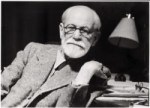
 Here’s further evidence that Sigmund Freud didn’t invent the concept of psychotherapy out of thin air:
 The plot should be familiar to most of us:
 That does it. The session with the French guy cracks Scrooge’s resistance, and new awareness arrives fast and hard. He wakes up a new man. With consciousness comes the desire for change. Now that Scrooge can see himself – the roots of his patterns of behavior, the distortions in his current cognition, and the pressing insistence of his mortality – he longs to express his authentic self, his best self – to become the man he truly is.



 Prince William, for his part, might choose to marry someone like Princess Diana, or he might not. His mother may well have been a lovely, giving person and the perfect model for a mate.
 The couple sitting in my office were clearly in no mood for social niceties. It was strictly down to business with these two.
 Christine Daniels was a transsexual sportswriter. For many years, she was known to thousands of sports fans as a columnist for the Los Angeles Times, writing under the byline “Mike Penner.”
 The news has been full of reports of Heidi Montag-Pratt and her claim to have undergone 10 separate plastic surgery procedures in one day. That includes rhinoplasty (a nose job), breast augmentation, lip collagen injections, chin reduction, and god only knows what else.


 The People's Therapist