 The clip at the bottom of this post is a performance of an excerpt from the Art of the Fugue, by Johann Sebastian Bach.
There are a few reasons why this music opens emotional floodgates.
This piece was written under astonishing circumstances that speak to the essence of what it means to work and to be human.
Bach wrote the Art of the Fugue at the very end of his life as the culmination of his greatest achievement, which was perfecting the art of contrapuntal music. A fugue (the word means “flight”) is a musical work in which parts are assigned to different “voices” which weave in and out of the piece in “counterpoint” to one another.
The Art of the Fugue is the longest and most complex collection of fugues every attempted, written by the greatest genius of contrapuntal music who ever lived.
Bach didn’t write this work because anyone asked him to, or because there was any particular demand for fugues or counterpoint at the time. In fact, fugues were out of fashion.
The Art of the Fugue was written because Bach loved his work, and sought to create an expression of his best self – the most authentic self, the person he could be when fully conscious and expressing what was best in him.
How do I know that?
Consider the fact that this fugue, like several in the Art of the Fugue, is based on a four-note theme that spells out Bach’s name: B♭–A–C–B♮ (‘H’ in German letter notation.) Yes – he literally wrote himself into it.
Another point to consider: If you’ve listened to the clip below, you’ll notice this final fugue of a long, involved series is not only astonishingly complex – the highest mastery achieved in the art of counterpoint – it is also unfinished.
That’s because Bach died while he was writing it.
Bach’s son, the composer, Carl Philipp Emanuel Bach, scribbled a note in the original autograph of this final fugue:
“Über dieser Fuge, wo der Nahme B A C H im Contrasubject angebracht worden, ist der Verfasser gestorben.”
(“At the point where the composer introduces the name BACH (which in English notation is B♭-A-C-B♮) in the countersubject to this fugue, the composer died.”)
Yes – Johann Sebastian Bach turned his name into music, then he put down his pen and died.
This is that music.
There is some controversy over this story. It is possible that Bach lived on a few more days, and worked a bit more, dictating or correcting fragments of other pieces. Musicologists and historians have debated these matters. But there can be no doubt of Bach’s intention. He wanted to die working, and to leave this intricate, haunting series of notes as his last will and testament. This is Bach’s soul, translated into music – a fugue, the musical creation he mastered above all others.
The music itself? It moves the way a mind moves when deep in purest thought.
To create, to DO SOMETHING, is to assign meaning to our time on this Earth. We are human – we chase dreams. Dreams of creation. That is our work. That is what our work represents.
If you are not fulfilled by the work you do – if you are feeling lost, unsatisfied, uninspired – listen to Bach, and dream.
Find your inner voice, and express it through creation. That is your best self making itself heard.
In the meantime – here is a fragment of beauty: the work of a genius, left to ponder for the ages:


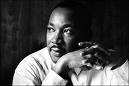 Dr. King would have turned 81 this week – an excellent opportunity to discuss ageism, an insidious form of discrimination.


 Sometimes a patient will stop during a session, mid-sentence, look abashed, and say:


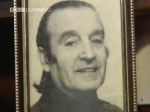 In Lennon’s case, it isn’t difficult to see the basis for the pattern. All Lennon fans know the familiar facts:
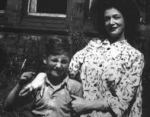 The pattern is hard to miss: abandonment to nurturing to abandonment – back and forth and back and forth. Lennon lost his father, but had his mother. Then lost his mother. Then had his mother again. Then lost her again. She adored him, but couldn’t keep him – so back he went to Aunt Mimi. Then she adored him again, but died suddenly, leaving him utterly bereft and as afraid to trust love in any form as he longed for the love he’d once cherished.
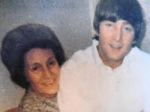 The borderline pattern is usually handed from parent to child. The parent exhibits this switch from one extreme to the other, and the child, attempting to adapt in response, begins to gyrate, too. In Lennon’s case, the events of his childhood were extreme, involving actual abandonment and the sudden death of a parent – so his pattern was particularly pronounced. By all accounts, John could be a very difficult person to deal with. His son Julian makes that clear in describing his few memories of his father, and even Sean, who barely knew his father, described him as having a strong temper and behaving unpredictably – affectionate sometimes, cruel and angry at others. The man who wrote “All You Need is Love” was indeed warm and loving and sincere and idealistic. He could also be vicious. That was the fearful child in John, fighting, unconsciously, to survive in a world fraught with the peril of abandonment and betrayal.
 If I worked with John Lennon, I would seek meticulously to be the same stable object each and every time he saw me. I would let him know I welcomed his anger just as I welcomed all his emotions, so long as he put everything into words instead of going into action on unexplored feeling. I would make certain he never received a response from me other than acceptance and support. The goal at all times would be to flatten out the gyrations – to offer a Middle Path, the path of the Buddha, the path of moderation.
 I would make sure Lennon knew I wasn’t like the people in his childhood. I would be there, the same old People’s Therapist, each and every time – offering support and understanding.
 The best self-help book in the world would be titled “Feel Better – Right Now!”


 The first thing the People’s Therapist notices about the Tea Party people is that they come to everything from a sense of deprivation. They are always – always always always – talking about their money, and how they don’t want anyone to get their hands on it. It’s theirs. They need it.
 Here’s an old radio interview, I believe from early 2006. I was featured on John Riley’s OutFM radio show on WBAI, FM 99.5. My segment begins at 39:30 about two thirds of the way through the show. I discuss the TalkSafe/PLUSES program that I was administrating at St. Vincent’s Hospital in Manhattan.
 TalkSafe/PLUSES ran into funding issues a year later, after I’d left. I believe it remains in existence, though in a different form, and still offers counseling to people with HIV through the HIV Medicaid clinic at St. Vincent’s Hospital.


 The People's Therapist