
Feeds:
Posts
Comments

This month “The Alternative” with Terry LeGrand celebrated its one year anniversary. Congratulations, Terry! (And congrats to his technician and sidekick, Andrew Holinsky, too!)

For the anniversary show, we talked about a good New Year’s resolution for every LGBT person – coming out of the closet – but with a twist. For many in our community, there’s a second coming out that’s less fun, but equally important – coming out as HIV+.

You can listen to the show here.  My segment starts about 31 minutes in, but as always, it’s worth sticking around for the whole hour.  To find out more about Terry and “The Alternative” on LA Talk Radio, check out Terry’s website and the show’s website.   And be sure to catch Terry’s new show “Journey to Recovery” which deals specifically with substance abuse and recovery issues.

If you enjoy his shows, you can become a Terry LeGrand “fan” on Facebook here.
Thanks, Terry! See you next month.
==========
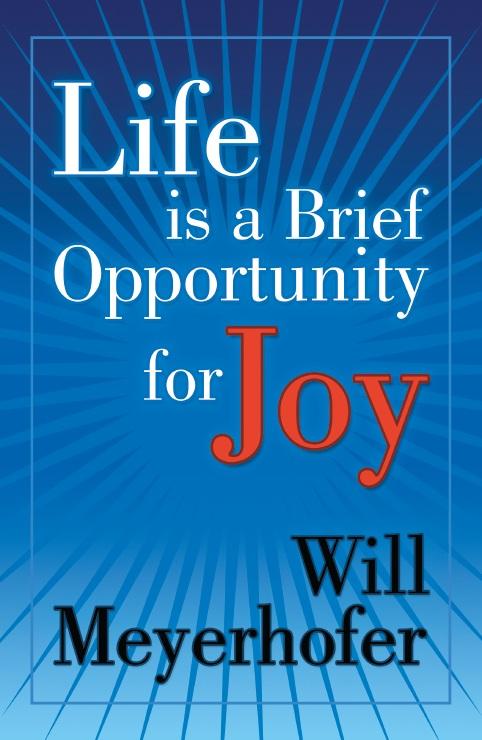
Check out The People’s Therapist’s new book: “Life is a Brief Opportunity for Joy

I get asked this all the time:  “What if it’s only chemical?”

Good question.  Why talk to a therapist if you can take a pill and be done with it?

Freud was intrigued by the possibility.  According to Peter Gay, in Freud’s late work, “Outline of Psychoanalysis:”

“[he] speculated that the time might come when chemical substances would alter balances in the mind and thus make psychoanalytic therapy, now the best available treatment for neuroses, quite obsolete.”

It’s appealing to treat mental illness as a chemical problem because chemistry seems clean and precise.  The fundamental functioning of the brain is both chemical and electrical, based on the difference in potentiality between sodium and potassium.  No problem.  You identify an imbalance, add ingredients, stir, and restore order.

But there is a problem.  The brain is also a ball of flesh, soaking in countless compounds we scarcely comprehend.

Injecting a drug – one more chemical – into your bloodstream is a primitive way to fine-tune complex chemistry.

That’s why psychiatric drugs are most effective when blunt, simple results are called for.  They can slow you down.  They can speed you up.  They can numb you or narrow your emotional bandwidth.  If you are bi-polar, they may help stabilize your emotional swings.  If you are psychotic, they may bring you back to reality, or at least closer to it.

For subtler changes in brain chemistry, talk therapy – or maybe talk therapy in tandem with a drug treatment component – produces better results.

How could talking in a therapist’s office affect the chemistry of the brain?

Your emotions are chemicals.  When you feel angry, your amygdala, a region in the center of your brain, releases a chemical signal.  That chemical – or series of chemicals, is what you experience as “anger.”  Joy, fear, sadness – all the emotions you feel as fundamental responses to the world around you – are chemicals.

Your thoughts are also chemicals.  When you admire a sunset, you are releasing chemicals which trigger electrical impulses that race through the circuitry of your brain.

Your thoughts affect your emotions.  So if I can affect  your thoughts, I can affect the chemicals triggering your feelings.

The brain is extremely mutable – neural pathways can be rerouted.  If I can make you aware of your thoughts and feelings, I can reroute the neurons in your brain, so different chemicals are released.

This isn’t as far-fetched as it sounds.  Here’s an example:  If you are depressed and I tell you to go for a run because it will cheer you up, I’m not merely nagging.  Aerobic exercise releases endorphins in your brain.  These chemicals cheer you up, relieving depression.

In the process, you will also create a memory – a piece of stored chemical information – that links depression with going for a run and feeling better.  A faint, newly formed neural link, and a piece of memory supporting that link, have been created.

Here’s another example:  if you are denying your anger – the typical pattern that creates depression – and I arrange during a session of psychotherapy for you to address your father, or your mother, or your boss or your girlfriend, and you feel anger well up and put that anger into words, saying what you’ve kept silent for years…that’s going to have effects on the chemistry of your brain.

When you get the words out, and feel your buried anger, new pathways will form between the ancient regions governing emotion in the center of the brain and more recently evolved cognition areas in the outer cortex.

New thoughts circulate new chemicals, create new memories, and effectively rewire the way you think.

You leave my office realizing you were angrier than you thought, and knowing it felt good to get it out.  You experience a lightening of mood.  Your girlfriend, when you get home, senses that you are less defended – your resistances are down.  This alters her behavior towards you, and she starts to open up to you emotionally to a new degree.  You begin questioning your old responses to her, and your old ways of doing things in general.

Your brain is flooded with new chemicals, and new pathways have been formed, that might, with further talk therapy, begin to replace old ones.

Subtle changes have been made to the chemistry of your brain – to who you are, how you think, and how you behave with others.

That’s what psychotherapy is all about:

Better living through chemistry.

=========

If you enjoyed this post, please check out The People’s Therapist’s new book.

2010 in review

The stats helper monkeys at WordPress.com mulled over how this blog did in 2010, and here’s a high level summary of its overall blog health:

Healthy blog!

The Blog-Health-o-Meter™ reads Wow.

Crunchy numbers

Featured image

The Louvre Museum has 8.5 million visitors per year. This blog was viewed about 240,000 times in 2010. If it were an exhibit at The Louvre Museum, it would take 10 days for that many people to see it.

In 2010, there were 126 new posts, not bad for the first year! There were 520 pictures uploaded, taking up a total of 60mb. That’s about 1 pictures per day.

The busiest day of the year was December 15th with 11 views. The most popular post that day was I suck at law.

Where did they come from?

The top referring sites in 2010 were abovethelaw.com, Google Reader, facebook.com, en.wordpress.com, and abajournal.com.

Some visitors came searching, mostly for the people’s therapist, people’s therapist, the peoples therapist, peoples therapist, and the people’s therapist blog.

Attractions in 2010

These are the posts and pages that got the most views in 2010.

1

I suck at law December 2010
40 comments and 1 Like on WordPress.com,

2

Fighting back from a bad review February 2010
32 comments

3

Maybe you’re not cut out for this place April 2010
35 comments

4

Extremely Versatile Crockery November 2010
45 comments

5

When the emptiness swallows you whole February 2010
28 comments

…and while I’m crowing about the year’s achievements, please take a look at my new book!

You own this

There comes a time in every big law firm lawyer’s career when things take a turn for the deeply serious. After two or three years, someone turns to you and says “okay – you own this,” and suddenly you’re no longer a glorified secretary or paralegal or guy/gal Friday – you’re an actual lawyer.

That’s when most biglaw attorneys think seriously about fleeing for their lives.

For me, the moment of truth arrived after a meeting near the top floor of the skyscraper at 70 Pine Street in Lower Manhattan, one of New York City’s iconic spires.

Nowadays we all know AIG as a smoking crater owned by the US government, but back then it felt pretty good to get waived past the guard in their Art Deco lobby and take the special elevator all the way up to the executive suite, stroll into the boardroom and help myself to a cheese danish.

My job that morning, as I understood it, was to play the part of a little second year along for the ride. I was accompanying an of-counsel from S&C, who actually knew what was going on. I worked hard to look the part, act serious and important and try my best to figure out what they were talking about.

The meeting lasted a couple hours – something to do with deciding on a structure for a deal involving the purchase and simultaneous sale of some smaller companies in the insurance business. The guy doing most of the talking was Howie Smith, AIG’s CFO. I smiled and played along.

Afterwards, we admired the view out the window – eighty-five floors up – traded gossip about Hank Greenberg’s palatial mansion, and chatted with Howie Smith’s son, Mikey, who was visiting the office and wanted to become a lawyer. Then we stepped back into the fancy elevator for the ride back down.

As the doors closed, I felt a chill. The of-counsel handed me a heap of papers.

“Okay, she snapped. “You own this deal.”

I gaped at her, uncomprehending. Didn’t she realize I was a mere child? A babe in the woods? Totally unprepared for such weighty responsibilities?

“Uh…really?” I sputtered.

She was already gazing at the flashing lights indicating descending floors, unaware of my existence.

That was that. I was screwed.

I had absolutely no idea what I was doing.

It’s one thing to be a first or even a second year corporate attorney. Pretty much anyone can handle setting up closing tables and “running changes” and setting up meetings and “taking a stab” at drafting this or that. But then someone turns to you in an Art Deco elevator and hands over the whole mess.

Generally speaking, that’s your clue to run for the hills.

I know – you still have loans, and each and every paycheck is one more step towards freedom, but let’s get serious – you either are one of those people who can turn into a biglaw senior associate, or god forbid, a partner – or you’re not. You can’t fake it – and someone in a position of power is going to figure it out eventually.

I don’t know what the precise equivalent of that elevator ride is for litigators. Maybe it’s “owning this deposition” or “owning this brief.” I honestly have no idea. But you’ll know it when you see it. Whatever it is, if you’re not really one of them, and you’ve been faking to get by – well, that’s your clue to hit the highway.

Of course, it’s always possible you are one of them.

I knew a guy at Sullivan & Cromwell, a few years ahead of me, who clearly fit the bill. After our first day working together, it was apparent I was in for hell, but when he didn’t seem to need me at 7:30 pm, I slipped out of the office and made it home. I was walking my dog in a mood of mournful introspection when the cell phone rang. An icy trickle of sarcasm leaked from the receiver.

Yep, it was him.

“Umm…Will? You comin’ back?”

“Right away.”

And back I went. We stayed up the entire night while he ran around like a speed freak, mumbling to himself and ordering me to alter documents, print them out and fax the whole mess to Bahrain, London, Beverly Hills, Budapest, Paramus, wherever.

This was a fourth year associate, “running his own deal.”

Nowadays this guy’s a partner, and from the reports I’ve received, even at S&C he’s considered a little nuts.

For me, it was that night – and the long unbroken chain of nights like it that followed – that drove home the reality I’d never be someone who “ran my own deals.”

To become a senior associate, you have to drink a fair amount of Kool-Aid. It means taking the plunge – going in deep, and actually assuming responsibility for very very serious things. You turn into the person who calls terrified first-years and sarcastically tells them to get their asses back in for another all-nighter. You become the person who curses everyone else for being useless and not working hard enough. You become the guy faxing side agreements to Bahrain at 5 a.m.

Eventually, if lightning strikes – at least in the old days when lightning still struck – you turn into the partner who terrorizes everyone around you. You enter the heart of the beast.

But that probably won’t happen.

Continue Reading »

An interesting question that touches on some basic Freudian theory:

I’ve been reading your blog for the past few months and I really enjoy it. I hope you can help with this problem that has completely stumped me.

Eight years ago I left an abusive relationship.  In general things are much better now, I don’t have nightmares anymore, and it doesn’t generally affect me on a day to day basis. Or so I thought.

I have a deep hatred for one of my coworkers that I was never really able to explain.  It suddenly occurred to me that he reminds me of my abusive ex.  That is, he reminds me of the way my abusive ex appears when you first meet him.  Friendly but in a really jokey way, a little awkward, a little self involved.  They’re like twins, on the surface. I try to tell myself that this does not mean he’s like my ex once you really get to know him, but it doesn’t help. I hate him. And now that I’ve realized why I hate him I only hate him more.

What can I do about this? I’d like to stop hating him but if I can’t do that, how do I handle it?

Thank you for your help,

S

And here’s my answer:

To submit a question to Ask The People’s Therapist, please email it as text or a video to: wmeyerhofer@aquietroom.com

If I answer your question on the site, you’ll win a free session of psychotherapy with The People’s Therapist!

Check out The People’s Therapist’s new book.

I suck at law

I uttered those words for the first time back in 2001, over lunch.

I wasn’t putting myself down; I was setting myself free. This was transgression – admitting the whole legal “thing” wasn’t for me.

It’s what you’re never supposed to say, because it opens you up for slaughter. It’s throwing down your weapon, taking off the armor and walking away from the fight.

Go ahead – tear into me. I double-dare you.

It was a weird lunch. I was sitting with another former associate from Sullivan & Cromwell. We weren’t friends. I actually sort of hated him. For two years he did his best to bad-mouth me and let everyone know he was a better lawyer.

Now he wanted to do lunch.

That’s because he’d been laid off (you know, the “bad review” routine.) I’d left S&C six months before and done the impossible – gotten a real job outside law, as a marketing exec.

He said he wanted to discuss “careers outside the law.” Yeah. As soon as we sat down he started shooting the shit about our law firm days.

No way.

I felt sorry for him. He had a fiance and was clearly a mess. But I wasn’t about to play along with that bullshit.

I knew what would get his attention. When he paused from the stream of false bonhomie to catch his breath, I seized the opportunity.

“I suck at law.”

This produced a deer in the headlights face. I went on.

“I never belonged at that place. Who was I kidding? You were twice the lawyer I was.”

From his expression, I’d morphed into a winged goat in a tutu.

First rule at a law firm: Never admit vulnerability. Second rule: Conform. Third rule: Compete.

It felt like an accusation. I meant it that way. You were much more lawyer-ey than me. No, really. I insist. You were far and away the better lawyer. You are law, dude. You much much law. Me no law.

Me free.

No one gave a shit at my new job if I was a good lawyer. That’s because I wasn’t a lawyer.

I wanted to shout it from the rooftops. Rent a skywriter. Hire a blimp.

From the outside I look like a pretty good lawyer. Top 20% at NYU. Article in a journal. Sullivan & Cromwell.

Yeah, well I’m not. I suck at law.

Sorry.

I’m good at school, and law school is school. That doesn’t make me a lawyer.

Here are the facts:

I ignore details. I hate small print.

I’m not a “team player.” I hate working on stuff with other people.

Money and power bore me. Give me music, books and art.

I’m not confrontational. Put me in a room and we’ll all start getting along.

I can’t do all-nighters. At 10 pm I go to sleep.

Nothing is more boring than the Supreme Court. They mostly (5-4) hate gay people. I mostly (5-4) hate them.

Litigation terrifies me. It’s complicated and scary. Threaten to sue me, and you win. That’s it. Take whatever you want and go away.

I suck at law.

Continue Reading »

This month on “The Alternative” with Terry LeGrand, we talked about staying conscious of the real impact of alcohol on our lives – especially at New Year’s Eve.

You can listen to the show here.  My segment starts about ten minutes in, but as always, it’s worth sticking around for the whole show.

To find out more about Terry and “The Alternative” on LA Talk Radio, check out Terry’s website and the show’s website.  And be sure to check out Terry’s new show “Journey to Recovery” which deals specifically with substance abuse and recovery issues.

If you enjoy his shows, you can become a Terry LeGrand “fan” on Facebook here.

Thanks, Terry!  See you next month.

==========

Check out The People’s Therapist’s new book:  “Life is a Brief Opportunity for Joy

One of my patients gets together sometimes for lunch with his ex.  It’s always awkward, he says, and a bit melancholy, but there’s something nice about it, too, and so it’s become a ritual.

This time she brought a piece of news – she’d met someone, and was getting married.

He was happy for her.  He knew that.  They’d been broken up for years, and were never really right together.  They’d dated for about seven months – she was the first person he’d seen after his wife died in a car accident.  Even when they were dating, he’d realized  she was probably too young for him and they had different interests and maybe he wasn’t ready and…well, it never really worked.

Yet, somehow, this news still hurt.

On the way home from the lunch he asked himself – Why?  Why does this hurt?

And then it came to him.

He pulled out his cellphone.

She was at her office, and seemed surprised.  He spoke to her frankly.

Listen,” he said. “I’m truly happy for you.  I mean that.”

“But…” she said, prompting him.

“But,” he hesitated.  “This sounds nuts, because we’re not together anymore, and we don’t want to be together anymore…but…I guess I just want to know I’m still your guy.”

He felt a little ridiculous, and wondered if she was going to hang up – but she didn’t.

“Oh, honey,” she said.  “Don’t worry.  You’re still my guy.  You’ll always be my guy.  That will never change.”

He felt tears welling up, and all he could think of to say was,”thanks.  I love you.”  And that was the call.

Now, in his session with me, he said he felt a little shaky, but okay.  It was as if she’d lifted a weight off his shoulders.  Their connection, whatever you wanted to call it, was still there after all this time.  Whatever she meant to him – and whatever he meant to her, still mattered.

Break ups are tough.  They are necessary sometimes, but they can leave you with a certain melancholy, an ambivalence.  There is always unfinished business in a relationship even when it’s run its course.

That was especially true for this guy because he’d lost his first wife suddenly, after only three years together.

“After my wife died,” he told me, “I vowed I’d never take for granted that I could talk to anyone whenever I wanted.  Of course, I’d give anything to talk to her again, but she’s not there.  So I talk things over with her in my mind – that’s all I’ve got.”

There are no easy answers when it comes to interacting with ex’s.  The relationship has run its course, and you both have a right to move on. Strong feelings may linger, and you might have to give each other some space.

That doesn’t mean you can’t be gentle.  Your ex is a person with whom you’ve invested a chunk of time – a person you have loved, who has loved you, and made you special in his life.  Some vestige of that bond is worth preserving, if you possibly can.

Of course, it’s toughest if the feelings remain strong.

One of my patients ran into her ex recently at a social function.  He told her he missed her, and she was surprised, when she looked in his eyes, to see an imploring look.  He meant it.  She knew, without asking, that he wanted to get back together, to give it another try.  But that was impossible.

It wasn’t that part of her didn’t want the same thing.  He was the one who had wanted to break up all those years ago, and she knew this was some kind of redemption – a chance to make him happy, and get that wish she’d clung to for so long.

But their time together was years ago – and she’d moved on.  She was in a new relationship.

She felt torn in two – one half in the past, wanting to give it another chance.  The other in the present, knowing it would never work.

And all along she was wondering if it was entirely in her head.  Maybe she was just reading something into his words, and his facial expression, that wasn’t there.

So they chatted about nothing, and then her ex turned to leave.  Nothing much was said.

She felt an ache for days afterward.

The next day she took out some old photos from their time together, and had a good cry.

She’d probably run into him again, one of these days.  And maybe he’ll have moved on, and maybe he’ll be in another relationship too, by then.

But there would still be that ache.

That’s the gift we receive for taking the risk of loving someone else.

Maybe he just wanted to know he was still her guy.

—————

Check out The People’s Therapist’s new book, “Life is a Brief Opportunity for Joy

Both sides now

My client was a hard-boiled commercial litigator, a junior partner. “When you want a street fight, call me in,” was one of her mottos. She won cases. She made a lot of money. She kicked ass.

She was having issues with a second year associate.

At first, they got along. The associate was bright, and wanted to impress. The problem was deeper. As the partner put it bluntly: “She just isn’t cut out for this place.”

Yeah. That old line. But now I was sitting with the partner who was saying it, nodding my head in agreement.

Here was the situation:

The associate grew up working class – a smart big fish in a small pond. She expected to compete and win, like she always had. Her aim at the firm was to show everyone she was the smartest one there. So she worked endless hours, volunteered advice before she was asked, and chatted about French films at lunch.

The partner hated her. It felt like a competition instead of a working relationship. She complained the associate didn’t “understand her place in the pecking order” and failed to show respect by deferring to the partner’s experience. A street fighter didn’t waste time competing with a kid to write an erudite brief – she could mop the floor with her in a courtroom.

Things came to a head when the partner reviewed a document with obvious typos and sent an email to the associate, saying – hey, did anyone check this thing before it went out?

She got back a half dozen outraged paragraphs: The partner never appreciated the associate’s work or the long hours she was putting in; she was arrogant and inconsiderate; she had no idea how to manage others; she didn’t know as much law as she thought. It concluded with a threat: if the partner didn’t want to work with her, she’d be happy to work with someone else.

The partner wasn’t sure what to do. The email was inappropriate and if anyone else saw it, would go over (as they say in Mississippi) like a fart in church. This wasn’t how things were done. Not at her firm.

The partner asked me what I thought.

The best plan seemed to be a gentle but firm nudge. Remind the associate she’d done good work, and that her abilities and dedication were appreciated, but make it clear the email was inappropriate. We talked over various approaches, and what needed to be said.

The partner kept reminding me it didn’t matter how many hours you worked, if you were sending stuff out to clients with obvious typos. She had a point. The associate needed to understand that wasn’t acceptable. The big message, in her mind, was make sure it doesn’t happen again.

Something else itched at her, too – the associate needed to stop taking this kind of thing personally – to buck up, and get on with the job.

Even as we talked over the partner’s response, I realized there was a bigger problem: these two people don’t like one another, and that associate doesn’t belong at that firm.

I know my client – we’ve worked together for months. I understand her side of things. But I see a lot of myself in the associate, too, and her predicament feels all too familiar.

Sometimes I feel like I’m standing in the middle, seeing both sides.

The partner is a pro. She grew up with a father who was a wealthy Big Law managing partner, and she thrives on the slightly frat boy-ish, hazing aspect of the commercial litigation world. She suffered through being a junior associate herself, but caught another partner’s eye early on, and earned her stripes. In her view, if you don’t like going for the jugular – a good dirty brawl – then you don’t belong there. The firm is a club, and she’s in that club, and she likes it that way.

Is she perfectly happy in her career? No. The grueling hours mean her personal life is, as she puts it, “a work in progress.” That mostly translates into abortive flings with other attorneys (some at her firm) and drunken hook-ups she typically regrets. She isn’t thrilled about being single, has mostly given up on kids and isn’t even sure she wants a family. But she loves her work, and if she has to spend too much time at a job, this is where she wants to do it. She has her Upper West Side two-bedroom, and her cat, and she takes nice vacations – active stuff, like skiing or horseback riding with tour groups of other wealthy, single women. She dotes on her nieces.

I never met the associate, but I could fill in the blanks from what the partner told me. She lives with her unemployed PhD boyfriend in a tiny apartment in Brooklyn, and is carrying both their school loans. He seems resentful that she’s never around, and they hardly ever have sex anymore. She hates the firm, but has no choice since jobs are hard to come by and they both have debt. She tells herself she has to succeed at this job, and she does everything they ask, including putting in brutal hours – but nothing seems to work. She does a lot that’s right, and never hears a kind word – but if she makes a stupid mistake from sheer exhaustion, she never hears the end of it. Lately, after arriving home at 11 pm feeling like a zombie, she wonders if she can force herself to return the next morning for another round of abuse.

Continue Reading »

A book

You can order it on Amazon.  It’s also available on bn.com.

Drop by my office and I’ll sell you one in person, signed and personalized.

You can even purchase it as an ebook for the Kindle or the Nook or iPad .

Thank you, everyone, for your support of this project.

There comes a time as a lawyer when you split in two – an angel and a devil.

The angel wants to do well – as I never tire of explaining, lawyers are pleasers. You want to make partner, earn a million bucks and be the best attorney in the world. To the angel, the firm is like your high school football team – go Skadden! Rah rah rah!!

The devil, on the other hand, would burn the place to the ground while he toasted marshmallows and sang campfire songs.

The irony is that it’s the law firm itself that turns little angels into devils – just by telling you that’s who you are.

A junior partner at a big firm told me how they did it to him. Two senior partners marched into his office and announced he was slacking off and taking advantage of the firm. It was a mistake, they told him, to make him partner.

In reality, this guy was a pleaser’s pleaser. He worked his ass off to make partner, and talked in all sincerity about his “gratitude to the firm for that honor.” He was as rah-rah as it got.

Unfortunately, none of that meant anything, because the economy sucked, and he wasn’t bringing in billables. According to firm logic, that meant he wasn’t trying, he didn’t care – he was a bad guy.

By the end of his grilling, all he wanted to do was slack off and go home.

They’d done it – turned an angel into the freeloading devil they told him he was.

A few weeks later, he’s still having trouble finding his groove, and feels tempted to fudge his hours, pad his expenses, and kick off early. It seems reasonable, all of a sudden, to glance at a document and hand it off to an associate to review instead of staying that extra couple hours at the office.

There are few things quite as frustrating as having someone question whether you are acting in good faith. It’s like one of those Hitchcock movies where they collar the wrong guy for a crime he didn’t commit and no one believes him when he insists he’s innocent.

Law firms do it all the time.

At Sullivan & Cromwell, it got to feeling like a roller coaster. I arrived at the firm fresh-faced and innocent, totally committed to doing my best. I know how absurdly naïve it sounds now, but I really did think I had a chance of making partner.

You couldn’t get more angel than me. I spent three years earning A’s in law school, pleasing professors, drinking the Kool-Aid, writing a journal article, drinking more Kool-Aid, talking about my commitment to “the profession” – all the while whipping up molten Kool-Aid gateau served with mint-rosemary Kool-Aid coulis.

Come to think of it, maybe that’s why I’m so bitter now – why lawyers are all bitter – because we bought in utterly at the start of things. We really were angels.

It’s a long, hard fall to the shadowland of Hades.

My expectations for Sullivan & Cromwell were ridiculous, in retrospect. I perceived the partners to be wise, caring mentors who would guide me to “excellence.” I bragged to everyone I met about where I worked, employing words like “collegial” to describe my vision of the firm. No kidding – “collegial.”

My plunge to the land of shadows only truly arrived when they ignored all that and accused me of being a slacker. It was their telling me I didn’t take my work seriously that somehow made it a reality.

There’s something about working your ass off only to be told you’re a slacker that actually turns you into a slacker. Suddenly padding your hours and avoiding work become the prime objective. Let the other little junior – Mr. Eagerness – handle things for a change.

A few days later, I’d snap out of it and remember why I was at S&C. It was the best, most prestigious law firm in the world! I wanted to make partner! I was going to make them happy, do my absolute best, and be a success!

Then I’d get stomped on by some senior associate telling me I didn’t even seem to care…and the process would begin again.

At some point, you go numb. (Even lawyers have their limits.)

Continue Reading »

This month on “The Alternative” with Terry LeGrand, we talked about surviving the holiday season as an LGBT person, especially if you’re feeling alone and maybe a little blue.

You can listen to the show here.  My segment starts about eleven minutes in, but as always, it’s worth sticking around for the whole show.

To find out more about Terry and “The Alternative” on LA Talk Radio, check out Terry’s website and the show’s website.

If you enjoy his show, you can become a Terry LeGrand “fan” on Facebook here.

Thanks, Terry!  See you next month.

Here’s an interesting letter that arrived unsigned:

I need help addressing a situation with a friend.

About 8 years ago, her dad passed away suddenly, and she continues to miss and mourn her dad.  We’ve been friends for about 6 years and for as long as I’ve known her, she’s always been… down.  There are parts that are more obvious or easier for me to understand — for example, she gets very sad around Father’s Day and her dad’s birthday.

Then there are parts that are just what I’ve experienced as her general outlook on life.  She always finds something to be sad about.  For example, she had complained about her job and coworkers and the long commute that was a strain on her social life.  Then she applied to and got a new job that will shrink her commute from 2 hours to 20 minutes each way.  I was so excited for her and called to congratulate her.  But she had already switched gears.  She spoke about how she’ll miss her coworkers and the familiarity of her old job, and how the new job has a more formal dress code.

That’s just an example.  And I’m finding it increasingly difficult to interact with her without being affected (or angered or frustrated) by her pessimistic outlook, which she sometimes applies to good news that I share.  I’ve suspected that her father’s death underlies her melancholy and have suggested several times that she seeks counseling, but she’s dismissed that suggestion.

Her down-ness has made me less inclined to talk with her.  She expresses a lot of appreciation for my friendship and often tells me that I lift her spirits and am a ray of sunshine to her.  But I don’t think she knows how much effort it takes, or how she’s often like a gray cloud to me.  How do I express this to her in a way that won’t make her more sad or down?  Should I?

Thanks.

And here’s my answer:

To submit a question to Ask The People’s Therapist, please email it as text or a video to: wmeyerhofer@aquietroom.com

If I answer your question on the site, you’ll win a free session of psychotherapy with The People’s Therapist!

For the record, a law degree is not “versatile.” Being a lawyer amounts to a strike against you if you ever decide to pursue another career.

So why do people keep insisting it’s an “extremely versatile degree”?

A bunch of reasons.

Law schools are in it for the money. Teaching law doesn’t cost much, but they charge a fortune – made possible by not-dischargable-in-bankruptcy loans. That makes each law school a massive cash cow for the rest of the university. Money flowing from the law school pays the heating bill for the not-so-profitable Department of Neo-Structuralist Linguistics.

Law students play along with the “extremely versatile degree” farce to justify the three years of their life and the ungodly pile of cash they’re blowing on a degree they’re not interested in and know nothing about. This myth is also intended to calm down parents. You need a story to explain why you don’t have a job, but that it’s somehow okay.

No one else cares. And that’s chiefly why this old canard still has some life left in it.

Time to put it out of its misery.

Why is a law degree not versatile?

Let me count the ways.

For one thing, it costs about $180k. Anything that leaves you two hundred grand in a hole is not increasing your “versatility” – it’s trapping you in hell.

For another thing, studying arcane legal doctrine for three years (a purely arbitrary number) leaves you with no translatable skills. The arcane legal doctrine you learn in law school isn’t even useful at a law firm, let alone anywhere else.

And let’s talk about the “skills” a lawyer “hones” in his “profession.”

A litigator is about the worst thing you can be if you want to do anything else. Why? Let’s examine the skills you “master” as a litigator.

Pumping up billables. Dragging out discovery. Dreaming up and laboriously penning pointless motions to create delay. Behaving in an oddly aggressive and hostile manner at meetings that end in a standstill. Organizing complicated information into folders, and folders of folders and labeling everything and organizing that into lists, and lists of lists, then billing for it by the hour. Researching recondite issues and writing memos you’re not even sure you understand. Wrapping your head around Byzantine procedural rules and forum and jurisdictional niceties and arbitrary court filing deadlines, all so you can trip up the other side with needless delay and expense.

Okay. Now translate those skills into the real world, where people make products and sell useful services.

See my point?

If you’re on the corporate side, at least you get to watch business people do their thing before you spend the night typing it up. That’s why corporate partners are considered more valuable at firms when it comes time to recruit. Corporate guys hang out with business people, so they bring a “book of business” (i.e., customers) with them. A litigator doesn’t even have clients, just cases, which might (God forbid) end some day. A litigation partner without a live case is dead wood awaiting pruning. Sorry.

Of course, the actual “stuff” of corporate law could drive you mad. Studying securities law is like learning the rules to the most boring, complicated board game ever invented. All you want to do is quit playing and go home.

But there’s a bigger, broader problem with switching careers when you have the letters JD after your name: people hate lawyers.

Why do they hate lawyers? A bunch of reasons.

Continue Reading »

Kinky Halloween

This week on a special Halloween edition of “The Alternative” with Terry LeGrand, we talked about kinky sex, and how your therapist has to be able to accept your tastes in bed, if you’re going to work successfully together.

You can listen to the show here.  My segment starts about eleven minutes in, but as always, it’s worth sticking around for the whole show.

To find out more about Terry and “The Alternative” on LA Talk Radio, check out Terry’s website and the show’s website.

If you enjoy his show, you can become a Terry LeGrand “fan” on Facebook here.

Thanks, Terry!  See you next month.

I took part in a “spirited conversation” about working in the law last week on an ABA podcast.

You can listen to it here.  I come into the conversation after about 9 minutes.

The official discussion topic was “work/life balance”…but given the current situation for most attorneys, I found myself “expanding” the topic a bit to deal with the reality of law firm hell.

Anyway – I hope you’ll give it a listen.

My thanks to the ABA Journal, and to our moderator, Stephanie Francis Ward, for setting up this podcast and inviting me to participate.

Here are the folks who were on the podcast.

Guests:

Stephanie Kimbro Stephanie Kimbro, MA, JD, has operated a Web-based virtual law office in North Carolina since 2006 and delivers estate planning and small-business law to clients online. She is the recipient of the 2009 ABA Keane Award for Excellence in eLawyering and the author of Virtual Law Practice: How to Deliver Legal Services Online, ABA/LPM publishing 2010. In addition to her law practice and writing, she is the proud and busy mother of two young children.
Will Meyerhofer Will Meyerhofer, JD, LMSW, is a psychotherapist in private practice in New York City. He holds degrees from Harvard, New York University School of Law and The Hunter College School of Social Work. Meyerhofer is a licensed and registered master of social work in New York state. His private practice website is A Quiet Room. He is the author of a blog, The People’s Therapist, reflecting a psychotherapist’s take on the world around us, and he writes a weekly column, “In-house Counseling” for the blog Above the Law. His new book, Life is a Brief Opportunity for Joy, will be available this month.
Jacquelyn Slotkin Jacquelyn Slotkin is professor of law and director of the LLM program for foreign lawyers at California Western School of Law. She is a former legal research and writing professor and the legal skills program director at California Western. Before returning to teaching 23 years ago, Slotkin spent five years in private practice. She has studied women since the 1970s beginning with her doctoral research on role conflict among college-educated women. Her first book, It’s Harder in Heels: Essays by Women Lawyers Achieving Work-Life Balance, written and edited with her lawyer-daughter, was published in late 2007. Their second book, Sharing the Pants: Essays on Work-Life Balance by Men Married to Lawyers was published in December 2009.
Joan C. Williams Joan C. Williams is a professor at University of California Hastings College of the Law, in San Francisco. A large part of her research focuses on gender, class, and work-family issues. She’s also founding director of the Center for WorkLife Law and is the co-founder of the center’s Project for Attorney Retention.

It doesn’t make sense.  You hate depression, but feeling sad can be okay – and everyone loves the blues.

That’s because depression isn’t about feeling sad.  And the blues isn’t about depression.

Depression is about regressing into a child’s way of relating to the world.  You become helpless, so you lose touch with your own anger, your ability to protest against conditions that make you angry.  Instead, you accept defeat, and turn the blame, and the anger, in on yourself.

Sadness, on the other hand, is a recognition of impermanence.  It is about accepting that life is a brief opportunity for joy.

It is far from certain that impending death intensifies the experience of living.  If no one ever died, it seems like there would be less suffering and, if certain logistical details could be overcome, things might actually be more fun.

We’ll never know the answer to that conundrum.  You may lodge a protest, but life remains short, and only rushes by faster the older you get.

On the other hand, the natural human response to that set-up is to grab what’s there and enjoy it.  Sadness – the memory of impermanence – intensifies your hurry to drink deep of  good times.  In the process, every drop tastes sweeter.

The blues are songs written about sad subjects.  The levee is gonna break.  My woman done left me. That sort of thing.

One of the saddest songs ever written is a blues song –  Son House’s “Death Letter Blues,” which begins like this:

I got a letter this mornin, how do you reckon it read?
It said, “Hurry, hurry, yeah, your love is dead.”

I could listen to “Death Letter Blues” forever.  It always makes me feel like cryin’.

But I always feel a little better afterward, too.

Why is that?

Because ol’ Sonny is sharing his pain with me.  And that feels good.  Makes us both feel better, or it did, back when Sonny was still kickin’.

Patients spend a lot of time in my office crying.  I once ran out of tissues – something a therapist should never do.  It was one of those panicky episodes, like running out of maple syrup at an IHOP.  People come to a therapist to cry.  I know I always did.

You come to have a good cry because it makes you feel better.  It feels good to open up and share the pain.

There’s another element to blues songs – the reason they’re not about depression.

The Blues fight back.  This is music that came up from African-American communities in the Deep South.  Those people knew oppression – heck, they knew human slavery.  But their souls were never dominated, even when their bodies might have been.

That’s the true history of the blues, and African-American music, period.  It’s subversive – it fights the power, stands up to the pain.  It stands up proudly.

The blues make good times from bad times.  They summon anger from fear and sadness, and in the process defeat depression.

The blues fight back by refusing to stay silent about the conditions the singer endures – poverty, loneliness and oppression.

Sometimes they fight back by refusing to lose their sense of humor. Check out Sonny Boy Williamson in “Fridgidaire Blues”:



No, but that’s alright mama, baby, I don’t like the way you do.
Well, but I been tryin’ two or three days, woman, you know, just to get rid of you.

There’s an obvious lesson here for beating depression.

Express your feelings someplace safe, and own your right to them.  You gotta right to sing the blues.

Don’t lose your ability to laugh at yourself, either.

Now – just in case you thought you didn’t care for the blues… here’s something sweet and lovely to tear up your soul:

There’s one thing every lawyer, no matter how miserable, seems to agree on: law school wasn’t that bad. In fact, it was kind of fun.

Things take a nosedive when you get to a firm. That’s when you start hating life.

Maybe we should take a look at this phenomenon, and ask ourselves why this might be the case.

There are a few prominent disparities between the experience of law school and that at a big law firm.

First – in law school when you work hard, you get a reward. There is an “incentive” for “doing your best.”

I remember a guy in my class at NYU who used to grow an exam beard every semester. He’d stop shaving a couple of weeks before exams. The beard would start to get scraggly – then, after the last bluebook was filled with scribble, he’d shave it off and everyone would hit a bar to celebrate.

It was silly, light-hearted fun, designed to focus attention on completing a goal.

Contrast that to a law firm, where nothing is silly, light-hearted or fun – and there is no such thing as completing a goal.

At a firm, you don’t “complete goals.” Thanks to your massive student loans, you are now someone’s property, and you work to avoid punishment. That means you work until midnight, then go in on the weekend. Rinse. Repeat. There is no end of semester. There is no end of the week. There is no end of anything. There is no vacation. There is no end.

Your reward for working harder than you’ve ever worked in your life? If you do a good job, no one complains – and you get more work.

That is, unless there isn’t any work, in which case you’re in trouble, because that means you’re not going to make your billables, which means you’re a parasite and a useless drain on the firm and you should feel terrible about yourself and fear for your job.

It’s also possible that you didn’t do a very good job on whatever it was you were working on harder than you’ve worked on anything in your entire life. That might be because you’ve been working eighty hour weeks with no vacation and receiving a steady stream of criticism, all the while fearing for your job, which is a problem because you have a wife who wants to have a kid and you’re $180,000 in debt. The Zoloft and Klonopin your shrink prescribed don’t seem to be doing the trick. Nor does the Adderall you’re popping with alarming frequency – the left-over Adderall from the first shrink, who diagnosed you with ADHD before the second one decided it was actually depression and anxiety.

It might be that all the other work you did for the past six months at the firm was good, or even very good – until you handed in this latest assignment, which wasn’t good. However, at a law firm, if you do something that isn’t good, it doesn’t matter if you did one hundred other things that were good. You did something that wasn’t good, which means you are bad.

The reason this thing wasn’t good might be that you had no idea what you were doing because they gave you something unbelievably, insanely, laughably complicated to do over the weekend with a totally inadequate explanation.

That brings me to a second way in which law firms are not like law school.

Continue Reading »

Our children


This month on “The Alternative” with Terry LeGrand we discussed a particularly troubling topic – suicide among LGBT teenagers.  You can listen to the show here.  My segment starts about nine minutes in, but as always, it’s worth sticking around for the whole show.

To find out more about Terry and “The Alternative” on LA Talk Radio, check out Terry’s website and the show’s website.

If you enjoy his show, you can become a Terry LeGrand “fan” on Facebook here.

Thanks, Terry!  See you next month.

There’s a scene in John Waters’ classic film, “Female Trouble” in which Edith Massey, playing Aunt Ida, begs her nephew, Gator, to give the gay lifestyle a chance.

Gator, poor thing, refuses, which sends Ida into pleading desperation.

Here’s the dialog –

Gator: Ain’t no way; I’m straight. I like a lot of queers, but I don’t dig their equipment, you know? I like women.

Ida: But you could change! Queers are just better. I’d be so proud if you was a fag, and had a nice beautician boyfriend… I’d never have to worry.

Gator: There ain’t nothing to worry about.

Ida: I worry that you’ll work in an office! Have children! Celebrate wedding anniversaries! The world of the heterosexual is a sick and boring life!

Sometimes I feel that way about the world of law.

For the record, I’m not trying to change anyone’s sexual orientation here, or even suggest that it could be changed – that’s not what this scene is about. The absurd humor in Gator and Ida’s exchange derives from Waters’ inversion of the normal situation: parents are supposed to nag you to be straight, not to be gay. Just like they’re supposed to nag you to get a job and work hard and act like an adult and get serious about your life and go to law school.

But a lot of the time I feel like Aunt Ida – pleading with lawyers not to get serious and buckle down, but precisely the opposite – to give something – anything – wacky and fun and subversive – or merely indecorous – a chance. That’s because, if you’re not careful, slaving away at a big law firm can drain all the spark out of life, leaving things looking…well…sick and boring.

Now and then, after I receive a new referral, I succumb to the temptation to Google that person’s name. The first few times I did this, it was to find out whether he or she was male or female. That happens sometimes – you get an email from “Pat” or “Jamie” or “Oyedele,” and set up an appointment, then aren’t sure what to expect.

The inevitable result of an online search, in the case of a lawyer, is a page from a law firm directory. You get a passport-size photo capturing the flannel-suited subject with a slightly shocked deer-in-the-headlight expression, then the inevitable list of schools attended, bar admissions and a capsule summary of obscure “practice areas,” all rendered in lawfirm-ese: “General Practice Group,” “Corporate Capital Markets Restructuring,” “Derivatives Litigation and Regulation.”

There’s no sense of an actual person in those pages – only a scary apparition from the world of the serious and very grown-up.

I still recoil, looking at those bland, comically formal law firm directory pages – just as I wince looking at my old photo in the Sullivan & Cromwell facebook.

In the case of a new client referral, that passport photo comes to life a few days later in my office, in the form of an unhappy person confessing his loathing for his firm, bemoaning the steady stream of abuse, the sterile, alienating culture, crippling hours – the usual lawyer misery.

I wonder how ordinary people can be split in two like that, transformed simultaneously into the miserable, suffering human being sitting in my office, while the outward appearance is meticulously maintained – that official law firm image of a ring wraith from the world of the humorless.

Then I remember how S&C worked its magic on me, embalming me in its parallel dimension of un-fun.

Continue Reading »