
Hey – I just got interviewed by none less than WorldClassPerformer.com!
Can’t really complain about that…or the interview itself, which is rather in-depth and (I humbly aver) rather interesting.
Here it is.
Hey – I just got interviewed by none less than WorldClassPerformer.com!
Can’t really complain about that…or the interview itself, which is rather in-depth and (I humbly aver) rather interesting.
Here it is.
Posted in Thoughts and Musings | Leave a Comment »

So, okay…I couldn’t resist. Dillon Hansen, the charming young producer from The Lisa Show on BYU Radio, mentioned maybe coming back to do another show, and, well…so he talked me into it. What can I say? He twisted my arm.
This week it was Lisa’s delightful and hilarious co-host, Richie T, at the mic (Richard T Steadman, if you want to get all formal about it), and we had a great time chatting about burnout and how it can really spoil that dream job, if you let it.
But, of course, you’re not going to let burnout rain on your parade, because you’re going to listen to the show HERE, and find out lots of useful pointers on defeating burnout before it defeats you. I start off the show right at the head, and we’re on together for about the first 15 minutes.
It’s a pleasure to work with true radio pros like Lisa and Richie (they both have backgrounds in theater and comedy and improv on top of years of experience on the airwaves, and it shows in a tightly paced, unceasingly entertaining show.)
The truth is I’d join them at the mic anytime they’ll have me. Thanks, guys.
================================================================

Please check out The People’s Therapist’s legendary best-seller about the sad state of the legal profession: Way Worse Than Being a Dentist: The Lawyer’s Quest for Meaning

And now there’s a Sequel: Still Way Worse Than Being a Dentist: (The Sequel)

My first book is an unusual (and useful) introduction to the concepts underlying psychotherapy:Life is a Brief Opportunity for Joy

I’ve also written a comic novel about a psychotherapist who falls in love with a blue alien from outer space. I guarantee pure reading pleasure: Bad Therapist: A Romance
Posted in Thoughts and Musings | Tagged burnout, chaotic emotionality, emotional dysregulation, pandemic, the Pandemic, workplace happiness | 1 Comment »

I suspect I’m dating myself, but does anyone else remember the Peanuts cartoons? Specifically that endlessly repeated gag (more like heart-wrenching tragedy) of Lucy offering to hold the football for poor, hapless Charlie Brown so he can kick it? Of course, she winds up pulling it away just in time for him to miss the kick and fly through the air screaming, then land in a heap, bruised and miserable, furious at himself for placing his trust once again in a faithless so-called friend.
Law firms do that. I mean, they do the Lucy bit, with the football.
“So…when you say he promised you’d be elevated to partner,” I asked one client just the other day, “Do you mean, as in, he actually promise promised to make you partner…or just sort of implied strongly it would happen?”
My client’s response was unequivocal: “He promised.”
I fumbled for wiggle room. “But can he do that? How much capital does this guy have at the firm to burn on elevating one of his own?”
My client wasn’t taking wiggle for an answer: “He’s the managing partner of a smallish firm. He can elevate whomever he wants.”
Wait. Hang on…one more question: “Did he specify when he’d make you partner?”
Now I had him. Because the unfailing law firm answer to any question regarding something good that’s going to happen to you (i.e., not to them) is: Not now…but soon.
Promising stuff to you (not now, but soon) is actually a key law firm technique for getting what they want from you (immediately.)
The looming temporal gulf between what they offer to you and what they demand from you is acute. It is stark. It is striking.
Compare and contrast:
The stuff they offer to you will arrive whenever they please, which seldom means anytime remotely contemporaneous with the current era. (And, no, don’t bother them about it, or they might change their minds.)
The stuff they require from you, on the other hand, will happen immediately. This very minute. As in, I’m aware it’s Saturday night, and no, I don’t care. I’m not asking – that’s me being polite. I’ll have it Monday morning or you’re fired.
That kind of right now. Law firm right now.
Returning for a moment to those lovely, tasty things that they’re promising to you… It’s worth asking just how long a period of time not now, but soon can be drawn out to occupy, at least in the minds of those who run law firms.
Posted in AboveTheLaw series, Thoughts and Musings | Tagged biglaw, equity partnership, getting reviewed, law firm, making partner, non-equity partnership, of counsel, reviews | Leave a Comment »
I had a blast this morning recording a segment on The Lisa Show, on BYU Radio. And no – it had nothing whatsoever to do with law! Isn’t that satisfying?!?

Instead, we laughed and chortled and giggled and had ourselves a grand old time talking about everyone’s favorite topic – “regression in the service of the ego” – and old tv shows! Cause that’s probably the best response to this pandemic – go watch more old tv shows!
Hey, it might make you feel better. In the meantime, check out the show here. I go on at about 9:00, but the whole thing is a delight and Lisa and her sidekick Richie are a blast and it was worth waking up to share some laughs. Thanks, guys! A great way to start the day.
==============================================================
Please check out The People’s Therapist’s legendary best-seller about the sad state of the legal profession: Way Worse Than Being a Dentist: The Lawyer’s Quest for Meaning
And now there’s a Sequel: Still Way Worse Than Being a Dentist: (The Sequel)
My first book is an unusual (and useful) introduction to the concepts underlying psychotherapy:Life is a Brief Opportunity for Joy
I’ve also written a comic novel about a psychotherapist who falls in love with a blue alien from outer space. I guarantee pure reading pleasure: Bad Therapist: A Romance
Posted in Thoughts and Musings | Tagged BYU Radio, Lisa and Richie, Nostalgia Television, The Lisa Show, the Pandemic | Leave a Comment »
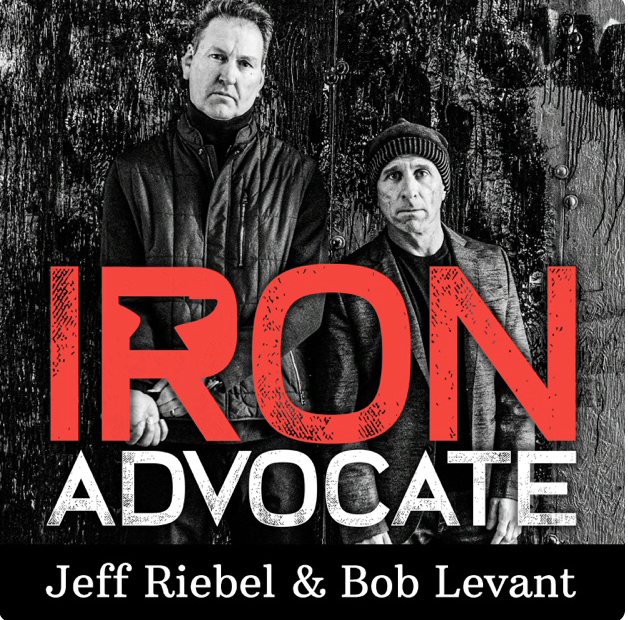
I’ve been on a lot of podcasts over the years. But there are podcasts, and there are podcasts. Iron Advocate, a new series created by legendary courtroom hard-asses Jeff Riebel and Bob Levant, is…well…a hardcore podcast. Which is to say, these guys don’t mess around.
If there’s a podcast out there where you really do cut the cr*p and say what you mean…it’s Iron Advocate.
We got real. Really real. The starting point was my all-time favorite subject – lawyer misery – but along the way we shared a few lawyers laughs as well.
You can hear the show on Apple Podcasts here, and on Spotify here. Brace yourself for impact, because this series is going to have an impact. Jeff & Bob have argued cases in criminal court where lives literally hung on the outcome. They don’t mess around.
Well, they do mess around. But even when they do mess around…it’s hardcore messing around.
Check out the whole series – I’m already hooked.
=============================================================
Please check out The People’s Therapist’s legendary best-seller about the sad state of the legal profession: Way Worse Than Being a Dentist: The Lawyer’s Quest for Meaning
And now there’s a Sequel: Still Way Worse Than Being a Dentist: (The Sequel)
My first book is an unusual (and useful) introduction to the concepts underlying psychotherapy:Life is a Brief Opportunity for Joy
I’ve also written a comic novel about a psychotherapist who falls in love with a blue alien from outer space. I guarantee pure reading pleasure: Bad Therapist: A Romance
Posted in Interviews, Thoughts and Musings | Tagged courtroom, judges, lawyer anxiety, lawyer misery, litigation, malpractice | Leave a Comment »


When Sarah asked me to put this together, my first thought was, well…let’s not just have me lecturing with slides, not at a time like this. So instead I talked her into doing a sort of conversation, along with me. And that was a relief. Because sure, therapists can dispense advice, and occasionally I might even stumble on a good piece of advice. But what therapists mostly do best is give people a chance to talk to someone who really wants to listen and cares about what you’re saying, so you can hear yourself, and we can both heal one another.
These are scary times we’re living through. You can reality-test your fears and you might find this time that no, you’re not just being neurotic, these times really are scary. During days like these, we need one another more than ever, and this webinar was a way of acknowledging that, and bringing a bit of healing to all involved. Hope you like it. And wishing you the very best as we all navigate this pandemic together. It will end.
===============================================================
Please check out The People’s Therapist’s legendary best-seller about the sad state of the legal profession: Way Worse Than Being a Dentist: The Lawyer’s Quest for Meaning
And now there’s a Sequel: Still Way Worse Than Being a Dentist: (The Sequel)
My first book is an unusual (and useful) introduction to the concepts underlying psychotherapy:Life is a Brief Opportunity for Joy
I’ve also written a comic novel about a psychotherapist who falls in love with a blue alien from outer space. I guarantee pure reading pleasure: Bad Therapist: A Romance
Posted in Current Events, Interviews | Tagged COVID-19, isolation, Lawline, lawyers, pandemic, working remotely | Leave a Comment »

There’s no getting out of it: This is a column discussing a syndrome in which lawyers (I suspect mostly women lawyers) sometimes cry on the job in what are arguably inappropriate situations, and the often negative (and avoidable) fallout that results.
Maybe I shouldn’t post this one. It’ll only get me into trouble. But what the heck – I’m here to talk about what I see and hear happening in the world of law, and darn it, this falls under that heading.
So here goes nothing:
My client had done what a lot of lawyers wind up doing at some point in their careers – tried to get herself fired.
That’s a phenomenon I see all the time in biglaw – the unconscious attempt to get yourself fired thing. You can’t rationally convince yourself to quit, but the irrational part of you knows it isn’t about to let you stay, either. So, in therapist speak, you “act out on unexamined feelings.” That manifests itself in stuff like complaining about your job a bit too loudly in places that are a bit too public. Or coming in late. Or not coming in. Or just acting weird at the office without owning the fact that people are going to notice and some of them aren’t going to like it.
I urge lawyers, if they have reached that point of no return (the place where you really cannot come back and work at your firm for one more day without losing your shit) then please, go ahead and own it, and make the decision to leave in a conscious way. It’s best to reframe all aspects of your life as conscious choices, including your career, and put your decision process into words someplace safe (like a psychotherapist’s office) so you can take back your autonomy and be the actor in your own life, instead of acting out on unconscious, unexplored emotions.
You’re allowed to quit. There will be consequences, especially if you don’t have another job lined up, or are saddled with a heap of school debt. But everything in life involves a cost/benefit calculus; this is just another one of those things.
The person who most needs to know what’s going on with you, so she can deal with it, is your boss. That way, instead of wondering what the heck is going on with that associate acting like a lunatic, she can process the news that you want out and, maybe even work together with you to find a solution.
My client freely admitted she’d been broadcasting her discontent to a lot of people – other associates, secretaries, paralegals, word processors, librarians, doc reviewers, you name it. In fact, if you were with her for more than a few moments, you probably heard how miserable she was, along with a stream of complaints and criticism about her firm.
Sure enough, a partner she worked with eventually took her aside and said, “I’ve been hearing you’re unhappy. Why don’t we set up a time to talk?” They agreed my client would come by her office the next morning.
And that’s when my client called me.
Posted in AboveTheLaw series | Tagged biglaw firms, law firms, lawyers, lawyers crying, Robin J. DiAngelo, White Fragility | 16 Comments »

I’ve always sort of wanted to do a TED talk. But I’ve also always thought it would be really hard to do a TED talk.
Luckily, I found the perfect compromise: Have someone else do a TED talk about me.
Liz Brown wrote a book in 2013 called “Life After Law: Finding Work You Love with the J.D. You Have.” It’s a good book, and one of the really great things about it is that I’m in it, as a case study of one of the lawyers (me!) who left law and went on to find another career.
In 2015, Liz did a TEDx talk about her book – and mentioned me! And I just realized it (sorry, got to keep better track of this stuff.) Here’s the talk, and here’s the bit about me.
Here’s some info about Liz. She’s an interesting lady, and well worth giving a listen (and a read.)
There are a couple teensy errors in her talk. I did Mergers & Acquisitions, not Mergers & Exchange, at S&C. At Barnes & Noble.com I did Marketing and Bus Dev, not sales. And my psychotherapy practice is located in lower Manhattan, not Brooklyn. But hey…she got a whole lot about me right (as in everything else including how much I love the work I do right now. )
So now I can (sort of ) say I did a TED talk (in a manner of speaking) without having to actually, you know, talk at TED. Yay!
====================================================
Please check out The People’s Therapist’s legendary best-seller about the sad state of the legal profession: Way Worse Than Being a Dentist: The Lawyer’s Quest for Meaning
And now there’s a new Sequel: Still Way Worse Than Being a Dentist: (The Sequel)
My first book is an unusual (and useful) introduction to the concepts underlying psychotherapy:Life is a Brief Opportunity for Joy
I’ve also written a comic novel about a psychotherapist who falls in love with a blue alien from outer space. I guarantee pure reading pleasure: Bad Therapist: A Romance
Posted in Interviews, Thoughts and Musings | Tagged Life After Law, Liz Brown, TEDx | 1 Comment »

Ah, lawyer misery. It is a force of nature. It drives the tides, powers the sun, causes the wind to blow and the trees to grow and the seasons to change. What would we do without miserable lawyers?
Actually, it might be nice. And I suspect the planet could handle happier lawyers, all things equal.
A week or two ago I chatted with the utterly delightful and refreshingly forthright Anjali Patel on her podcast for Sweatours, which she founded, and which is super worth checking out because it’s all about making law students and lawyers generally happier and, well, well-er.

Anjali assigned our podcast episode the adorable title: “Why Some of Us are Miserable.” Who can resist a Victor Hugo tie-in?!
You can listen to the podcast here. I can’t recommend it enough. Anjali is something special – totally committed to telling the truth about lawyers’ lives, which is refreshing, and she’s smart, too, and knows what she’s talking about from experience. And (I love this part) she’s actually read my books, so we could get into the nitty-gritty.

This was a lot of fun, and I hope Anjali will have me back, cause trust me we could keep on going. Thanks to everyone at Sweatours – together, maybe we can turn the tide a bit, and spark a little lawyer joy.
====================================================
Please check out The People’s Therapist’s legendary best-seller about the sad state of the legal profession: Way Worse Than Being a Dentist: The Lawyer’s Quest for Meaning
And now there’s a new Sequel: Still Way Worse Than Being a Dentist: (The Sequel)
My first book is an unusual (and useful) introduction to the concepts underlying psychotherapy:Life is a Brief Opportunity for Joy
I’ve also written a comic novel about a psychotherapist who falls in love with a blue alien from outer space. I guarantee pure reading pleasure: Bad Therapist: A Romance
Posted in Interviews, Thoughts and Musings | 1 Comment »
 You are really, really sick of law. In fact, you want out. At a minimum, you need to get out of your current job, or you might die. That much is not in dispute.
But you still have the loans. Therefore common sense says you should “give law one more try.”
As H. L. Mencken once observed:“For every complex problem there is an answer that is clear, simple, and wrong.”
You sense this quotation might apply to your current situation, because it seems clear and simple you should go find another job in biglaw, at least for a year. Here are some screamingly clear and simple reasons why:
The list of “cons” includes:
A lot of lawyers find themselves in this situation, stuck (in the metaphorical sense) between a rock (school loans) and a hard place (the thought of continuing to practice law.)
However, the final decision tends to be along the lines of – well, no harm in going for an interview. Which is why you’ll probably wind up going in for that interview.
“So, should I go on this interview?” One client asked me recently. I knew he was talking about that interview.
Posted in AboveTheLaw series, Thoughts and Musings | Tagged interview, job interviews, law firm interviews, law school loans | 1 Comment »

I had a ball a few weeks ago recording a podcast with the delightful Kimberly Rice, of KLA Marketing. You can hear the results here.
We talked about my background, including my strange journey from biglaw to psychotherapy, then mulled over the experiences of lawyers nowadays in a variety of settings and pondered the future of the profession.
It’s a far-ranging conversation, and a lively and fun one. Thanks, Kimberly!

==========
Please check out The People’s Therapist’s legendary best-seller about the sad state of the legal profession: Way Worse Than Being a Dentist: The Lawyer’s Quest for Meaning
And now there’s a new Sequel: Still Way Worse Than Being a Dentist: (The Sequel)
My first book is an unusual (and useful) introduction to the concepts underlying psychotherapy:Life is a Brief Opportunity for Joy
I’ve also written a comic novel about a psychotherapist who falls in love with a blue alien from outer space. I guarantee pure reading pleasure: Bad Therapist: A Romance
Posted in Thoughts and Musings | Tagged biglaw firms, depression, law firms | 1 Comment »

My client said her firm had, more or less, a checklist of what they wanted in a lawyer they made partner. And she had knocked herself out checking off every last damn item.
Other folks in her class, even junior partners at her firm, considered her promotion, at least to of counsel, to be a given. As one put it, “if not you, then who? You’re the dream associate, a superstar.”
The logic was simple: They have to promote someone, and if it’s anything even vaguely resembling the meritocracy they claim it is, she had to be that someone.
But no, as you might be guessing, that’s not how things worked out. They promoted no one.
After a year, or two or (really) many years of “making the partnership sprint,” the firm told her she wasn’t up for anything – not partner, not of counsel, not senior attorney, nothing. At her review, she was informed she could remain at the firm, as an associate, for as long as she wanted. That’s what they were offering, in gratitude for years of devoted labor – more of the same.
Oh, and there was one more thing: They needed her to work late that night on an important, complicated filing due the next morning. (No, I’m not making that up.)
Continue Reading »Posted in AboveTheLaw series | Tagged biglaw, biglaw firms, partner, Taylor Mac | 5 Comments »

I rode the subway up to midtown Manhattan last week, to the sound studio at ALM Media, to record a podcast with the brilliant and wonderful Leigh Jones.
We talked about lawyer suicide, in response to several recent suicides by BigLaw partners. It was a serious conversation about a very serious topic, and you can listen to it here.
Inevitably, we expanded the discussion to cover the broader issue of lawyer mental health and lawyer unhappiness.
My thanks to Law.com and Leigh and Vanessa Blum, and their colleagues.
==========

And now there’s a new Sequel: Still Way Worse Than Being a Dentist: (The Sequel)
I’ve also written a comic novel about a psychotherapist who falls
in love with a blue alien from outer space. I guarantee pure reading pleasure: Bad Therapist: A Romance
Posted in Interviews, Radio | Tagged Law.com, lawyer suicide, Leigh Jones, podcast | 1 Comment »

By definition, anyone who asks me to be featured on her podcast is a lovely person…but Karima Gulick, even if she hadn’t asked me to be on her terrific podcast for lawyers, would still be a completely lovely person. She’s just great.
The podcast, called Gen Why Lawyer, is focused on young lawyers who “who dare to live their lives on their own terms and who are building fulfilling careers.” That sounds good to me. You can read more about it here.
For more information on Karima, and her producer, Nicole Abboud (who also hosts some of the podcast episodes) click here.

Karima and I spoke for about half an hour, but managed to cram in a lot of talk around about the challenges lawyers face in their jobs, and the work I do as a therapist to try and help them.
You can listen to our podcast episode here. It has been assigned the mellifluous title “Understanding and overcoming procrastination, burnout and anxiety with Will Meyerhofer”…which makes sense, since who else could be better to understand and overcome procrastination, burnout and anxiety with than yours truly?
The Gen Why Lawyer podcast series is so strong that you really ought to check them all out – there’s a long list of episodes available here, and I’ve been dipping in and have to admit I’m hooked. (I’m Episode #154, so yeah…there’s a lot to explore.) What they’ve put together is incredibly impressive and useful, too.
Heartfelt thanks to Karima and Nicole and the folks who help them put together The Gen Why Lawyer – I’m honored to be a part of your series.
==========

Please check out The People’s Therapist’s legendary best-seller about the sad state of the legal profession: Way Worse Than Being a Dentist: The Lawyer’s Quest for Meaning
And now there’s a new Sequel: Still Way Worse Than Being a Dentist: (The Sequel)
My first book is an introduction to the concepts behind psychotherapy: Life is a Brief Opportunity for Joy


I’ve also written a comic novel about a psychotherapist who falls in love with a blue alien from outer space. I guarantee pure reading pleasure: Bad Therapist: A Romance


Posted in Interviews | Tagged anxiety, billable hours, depression, group psychotherapy, law firms, mental health, procrastination, psychotherapy | Leave a Comment »
 It was my pleasure to sit down a couple weeks ago with Megan Hawksworth, of the Mastering Counseling podcast, and talk about being a therapist. I always enjoy a chance to compare notes with another person in my field (Megan is a licensed Marriage and Family Therapist) and talk shop – and Megan was a terrific host.
Our topic was the whole notion of being a “specialist” as a therapist, which is obviously relevant to my practice, since I’m typically considered “the lawyer’s therapist.” It’s true that I used to be a biglaw corporate associate and have written books about law and mental health and treat a great many lawyers in my private practice. However, it’s also worth noting that I originally started out as a “gay therapist” working with HIV+ gay men in a hospital setting and then ran a large, diverse private practice as a “downtown therapist” first in Battery Park City and then in neighboring Tribeca, working mostly with area residents and folks in creative fields. So if I’m a specialist, I’ve had a few specialties.
 The larger issue we chewed on is that every therapist, by necessity, is a generalist – it comes with the territory. People are complicated, and diverse, and labels, while useful in some contexts, tend to blur important distinctions in others. We’re all a lot like everyone else – and completely unique, as well.
Anyway, it’s all super-interesting grist for the mill and led to a lively discussion. Here’s a link to the podcast. The MastersinCounseling.org blog, authored by Dr. Barbara LoFrisco (another therapist) is also well worth checking out.
I would be more than happy to talk about psychotherapy forever (it’s my very favorite subject), and it’s always a pleasure to sit down with a colleague and bounce ideas off one another. This was an especially fun interview.
Don’t get me wrong – you know I love lawyers. But everyone likes to talk to a therapist, right? Apparently, I’m no exception.
==========
And now there’s a new Sequel: Still Way Worse Than Being a Dentist: (The Sequel)
I’ve also written a comic novel about a psychotherapist who falls
in love with a blue alien from outer space. I guarantee pure reading pleasure: Bad Therapist: A Romance
Posted in Interviews, Thoughts and Musings | Tagged eating disorders, gay men, HIV, lawyers, MastersInCounseling, psychotherapy, specialists, substance abuse | 1 Comment »

There’s a new place in biglaw – not always a comfortable place – called the middle. One of its defining characteristics is euphemism, particularly around job titles. Consider yourself lucky if you’re merely saddled with a legal anachronism like “Of Counsel” or “Senior Counsel” or the more workaday “Senior Attorney” (i.e., a lawyer who’s been here a while, which is apparently the best we can say for him), as opposed to that vague moniker creeping into the legal world, borrowed from finance or consulting firms, “Principal.”
The ultimate horror (though somehow preferable as middle titles go) is that now-commonplace epitome of biglaw oxy-moronicness: “non-equity partner.” Every thinking person’s initial objection to this laboratory-experiment-gone-horribly-wrong of a credential, or title, or status, or whatever it is, is that in purely legal terms, it’s nonsense. How can a partner, meaning a member of a partnership, i.e., a fundamental part of an entity defined by shared ownership – not own anything? I’ve run this past tax attorneys (the smartest of all lawyers) and they agreed to a man (and woman): This is more than a quibble – the concept is absurd.
In essence, a non-equity partner is a non-partner partner. If a partner owns nothing in a partnership, it’s not merely that the partnership is non-equitable, it’s that the existence of a non-owning partner in said partnership renders it a non-partnership. The other guys, who own stuff, have a partnership. You, as a non-equity partner, might as well be called “that guy we let work here until we decide differently” (thus, perhaps, was born yet another neologism, the term “de-equitize.”) The phrase “salary partner” only makes things worse, by sweeping less of the evident cognitive dissonance under the rug. Might as well emblazon yourself “Proletarian Viscount” or “Marquis of the living wage.”
In fairness, the whole problem began when someone needed to come up with a word for lawyers who somehow never left their firms, but on the other hand weren’t really getting anywhere, either. There had to be something better to call them than “fourteenth year associate,” which is one of those titles more apt to leave a lawyer gazing into a mirror, his face wet with tears, than crowing with pride at a firm cocktail event.
More importantly, “Fourteenth year associate” sounds bad in front of clients, and let’s face it, the entire issue of concocting these titles for folks in the middle is about appearances, i.e., what outsiders think. No one cares what you think, and everyone knows where you dwell (amid the dark and dreadful middle realm.) Law is like fashion (to paraphrase Heidi Klum): You’re either in, or you’re out (and no, the middle isn’t in, so all the more reason for clever euphemisms.)
Let’s pause for a moment and get all “big picture” about things: What lies behind this phenomenon? Why doesn’t anyone in biglaw just work hard, make “the sprint” for partner, win the big prize and get “elevated” anymore?
Continue Reading »Posted in AboveTheLaw series, Thoughts and Musings | Tagged biglaw, euphemism, law firms, mid-law, non-equity partner, of counsel, partner, partner emeritus, partners, partnership, principal, special counsel, tenure | 5 Comments »
 If you’re like me, the letters CLE, lined up, one next to the other, might not set your pulse racing. Contemplating an hour devoted to continuing legal education, the terms that spring to mind – “somnolent,” “soporific,” “soul-crushing” – seldom correspond to the seat-of-your-pants thrill-seeking typically associated with the practice of law.
Néamoins, as we say à Paris. Il y a des exceptions.
Imagine if CLE could be fun, gripping, in fact – an outlet for a cry of anguish from the depths of your soul – projected before your eyes as if by sorcery! Picture in your mind a CLE that beguiles, entices, titillates…betrays even as, and what, it portrays.
I did. And I had a vision that lit my soul on fire.
And so, in partnership with the gangsta cinematic visionaries of Lawline (including that sultry siren of the silver screen, Sarah Mills!) I crafted what can only be termed the Citizen Kane of CLE videos.
An alchemical admixture that simmers the savage honesty of Godard alongside the fragrant whimsy of Spielberg, baked en croute with a sprinkle of Kurosawa-ian poignance, “Mental Health, Substance Abuse & Competence in the Legal Profession” is an instant classic – often harrowing, sometimes hypnotic – a kaleidoscope of sound and image imbued (merci, M. Kubrick!) with the searing cry of primordial birth pangs exploding across human existence.
Don’t believe me? Here are some clips.
I’ll set them up (since I’ll probably be doing the talk show circuit soon as word spreads and “MHSA&CinLP” becomes an international phenomenon.)
Go ahead, make popcorn, grab a diet root beer. I’ll wait.
We begin with “Understanding Depression and Anxiety in a Law Firm” – the CLE equivalent of the shower scene in Psycho:
Still with me? Need to catch your breath?
Brace yourself for “How Anxiety Works.” Remember the bicycle with E.T. in the basket, lifting off into a starry summer sky? Well, here we go again…
What to say about “How to Handle Being Trapped by Debt & Burnout”? Everyone repeats the same mantra: ‘The Andalusian Dog” meets “Hiroshima, Mon Amour.” But press fast forward, beyond the clichés. Film language is not about words on a page, but light, color…and, perhaps, a smidgen of je ne sais quoi.
Posted in CLE, Interviews, Thoughts and Musings | Tagged alcoholism, cinema, Citizen Kane, CLE, CLE Training, CLE videos, competent representation, Lawline, Legal Ethics, legal profession, Mental Health and Law, substance abuse | Leave a Comment »
 Before I was a psychotherapist, I was a patient, and at some point in my time as a patient, I participated in group therapy, and witnessed an unsettling interaction. (Unsettling-interaction-witnessing occurs in groups, where you spend time watching people “work their stuff out” and often “work your stuff out” at the same time.)
A new group member, a twenty-something, showed up for his first session with us, and like new members sometimes do, he presented as quiet and a bit deferential – eager to fit in, and above all, to please.
Eventually, the therapist leading the group went to Newbie directly, and asked how he was doing on his first day. He replied with some variant of “fine” and she probed further, asking if there was anyone in the room he felt drawn to, or perhaps shy to approach (this is typical group technique, designed to make the Newbie conscious of how he’s relating to others in the room.)
Newbie opted for the “drawn to” half of the question, probably aiming to sound upbeat rather than scared, and gestured towards an older guy sitting beside him.
“I guess I’m drawn to Joe. He seems like a father figure to me.”
To which, without a flicker of hesitation, Joe snapped under his breath (loud enough for everyone to hear): “I’m not your damn father.”
Newbie winced, and he wasn’t alone. That was a chilly welcome, coming from a member of your new therapy group.
On the other hand, Joe’s statement was true – he wasn’t Newbie’s damn father. More to the point, he didn’t want to be, to judge from his reaction. That wasn’t Joe’s role. He didn’t sign up to parent Newbie in that therapy group; he was a member like anyone else, trying to make himself a bit less neurotic and maybe happier. It was Joe’s right to be there, in that room, for himself, taking care of himself. And maybe Newbie wasn’t the only one there longing for a father figure – maybe Joe could have used a father figure, too.
I realized at that moment that I’d been like Newbie in my first group, too – searching for a father (for reasons I won’t bore you with), and drawing close to folks I might have been better off shying away from.
There were larger implications: I’d done the same thing at workplaces, including at my law firm, with disastrous results.
A lot of lawyers make that mistake. After working as a therapist with lawyers for a dozen years or so, I can say plenty of attorneys confuse their law firm with a parent figure, then relate to the firm like eager-to-please children. It leads to hurt feelings, resentment, anger and much unnecessary human misery.
Posted in AboveTheLaw series | Tagged law firms, lawyers, pleasing, profession, regression, transference | 8 Comments »
 To talk about lawyer burnout in a meaningful way, we have to mention the finish line problem. It’s the common element in every lawyer burnout story I’ve heard.
So imagine you’re running a marathon and arrive, gasping for air, at the final hundred yards. Onlookers cheer. Digging deep for that last ounce of energy, you can almost taste the relief of crossing the finish line.
Then some guy emerges from the crowd with unsettling news.
“Did we forget to mention there’s another marathon, starting right now? We need you to run that one too.”
You process these words. You don’t scoff, or laugh, because this isn’t a joke. He means it, and you’re going to do it. First of all, because you’re a trooper, and a team player. Second, (setting aside our metaphor for the moment) because you’re a lawyer and so you don’t have a choice in the matter, not merely because you’re a born pleaser and deeply risk-averse and highly competitive and ambitious (and maybe never asked yourself in any meaningful way what else you might want to do with your life) but also (perhaps) because you owe a fortune in school loans.
In an attempt to pull yourself into a frame of mind suitable to running another 26 ½ miles without a break, you tell yourself that, after this second marathon, there’ll be another finish line, and this time there will be an end, a respite, some rest. Might as well look on the bright side – you are young and smart and capable and filled with an unstoppable go-getter spirit. You’ll pull off the impossible.
Sure enough, you make it to the second home stretch. Once again the crowd cheers. You can just about taste the sweetness of slowing down and resting.
Then someone else steps out of the crowd. Her tone is matter of fact: “It turns out there’s another marathon, and we’re short-handed. You’ll have to run it.”
You feel numb, or maybe like screaming, or maybe just numb – it’s hard to tell. Another marathon, with no break. You have to keep running.
So you do. But at some point, while running, you’re also crying. Still running, just crying at the same time. And there’s anxiety, that comes in waves, leaving you gasping. Weirdest of all, there’s also a persistent fantasy of tripping and twisting your ankle, and you contemplate how nice it seems like that would be, to twist your ankle. Not to die or anything like that, just limp off to the hospital and lie down and sleep and not run anymore. That would be better than this.
But that doesn’t happen. You don’t trip, or twist your ankle. You do find yourself hurling a cup of gatorade at a race official, which almost gets you kicked out. But you cool it, because you can’t get kicked out (although part of you wants very much to be.) You have to think about your career. You have to keep your cool. You have to keep running.
All you want in the world is to stop running, which is the one thing in the world you’re not allowed to do.
This, in a nutshell (a metaphorical nutshell – and yeah, the nutshell itself is also a metaphor so wow, we’re getting meta here) is lawyer burnout, a phenomenon that’s all about denial, so it shouldn’t come as a surprise that, by the time you realize burnout might be coming, it’s already here, and a whole lot worse than you think.
How bad does lawyer burnout get? On a reasonably regular basis, lawyers arrive at my office, sit down, and burst into tears. That happens. And these aren’t people with much history of bursting into tears.
Posted in AboveTheLaw series | Tagged Adderall, anxiety, biglaw, burnout, lawyer burnout, marathon, overwork, tantrums, workaholics | 8 Comments »
 We all know lawyers are pleasers. Everyone knows that. The weird thing is how it doesn’t feel that way from the inside. When you are a lawyer, and a pleaser, you don’t think you’re a pleaser – it seems more like you’re the only conscientious person in the world. You are the one who shows up on time, sits in the first row and hands your homework in on schedule, always perfect. Other people don’t, and that’s annoying. Thus begins a typical lawyer pet peeve – that other people never live up to their obligations. Stretch that out to the extreme, and you wind up doing a job where you bill 3,000 hours a year, just to set a good example for everyone else.
The odd thing is that lawyers simultaneously manage to feel a bit like imposters even as they’re pleasing, because pleasing isn’t the same thing as achieving. Achieving is an objective fact – you have accomplished something useful, good, of value. Pleasing just means you’ve convinced someone else that you’ve given them what they wanted, which might involve little more than smoke, mirrors and billable hours.
Lawyers are good at working hard, just like they’re good at racking up grades in school, which amounts to pleasing teachers. But hard work and good grades in school don’t mean you can play saxophone or or paint a portrait or write a gripping novel. It doesn’t mean you can design a computer or cure cancer either, especially since lawyers tend not to be much good at science and math (if you were any good at that stuff, you’ve have gone to med school and really pleased your parents.) Even if you are a lawyer good at science or math, it’s unlikely you’re designing computers or curing cancer because you’re probably an IP lawyer, who fled the lab bench for “money and prestige” (the magical lawyer incantation.) It’s a small wonder “imposter syndrome” thrives among lawyers. Don’t think you fooled me. We both know you aren’t really that good – you just run around trying to please everybody to distract them from the sense of defectiveness that haunts you, keeps you dancing so it won’t become obvious you’ve no idea what you want to do with your life. Everyone else seems to have somehow figured out what they want to do with theirs. Except lawyers.
So who do lawyers seek to please? Lots of folks. Pretty much everyone, except themselves.
Posted in AboveTheLaw series, Thoughts and Musings | Tagged anxiety, depression, extreme homes, giving notice at a law firm, lawyers, partners, pleasers | 5 Comments »
The first book is called "Life is a Brief Opportunity for Joy"
Life is a Brief Opportunity for Joy
The second book is called "Way Worse Than Being A Dentist"
Way Worse Than Being a Dentist: The Lawyer's Quest for Meaning
And the SEQUEL has just come out!
STILL Way Worse Than Being a Dentist
I've written a comic novel about a therapist, called "Bad Therapist: A Romance"
...or come by my office and I'll sign one for you.
| M | T | W | T | F | S | S |
|---|---|---|---|---|---|---|
| 1 | 2 | 3 | 4 | 5 | 6 | 7 |
| 8 | 9 | 10 | 11 | 12 | 13 | 14 |
| 15 | 16 | 17 | 18 | 19 | 20 | 21 |
| 22 | 23 | 24 | 25 | 26 | 27 | 28 |
| 29 | 30 | |||||
 The People's Therapist